There are days on the water that remind you why experience matters more than gear. Two consecutive mornings. Same lake. Same overcast sky. And two completely different outcomes — depending entirely on whether you were willing to adapt.
Bass fishing with bait — whether that’s a hand-tied streamer at the end of a fly line or a soft plastic worm rigged behind a baitcaster — is never a fixed equation. The fish write the rules. The best anglers on the water learn how to read the language being spoken and respond in kind. That’s exactly what a recent two-day stretch taught me again, 35 years into doing this.

Day one was magic. Day two required a conversation.
This post is about both days — the read, the adjustment, and the tactics that put fish in the net when the bite slowed. Whether you’re throwing a baitcaster or casting a 9-weight fly rod, these principles will sharpen how you approach your next bass outing.
Day One: Overcast, Topwater Bite, and Fish Holding Tight to Structure
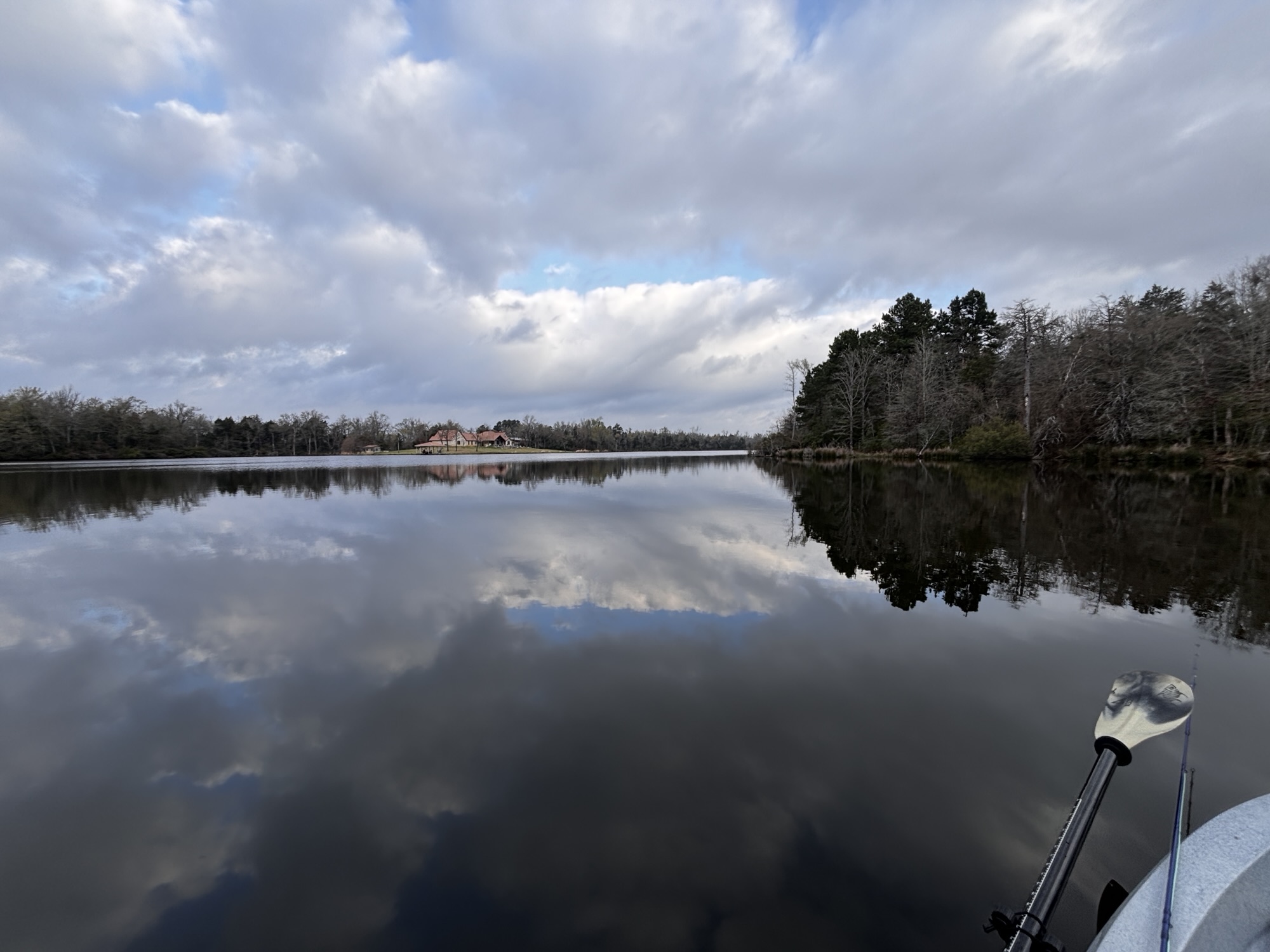
We launched under a low, flat ceiling — the kind of partly cloudy sky that diffuses light evenly across the water and kills the harsh glare that pushes bass deep and slow. No direct sun. No harsh shadows. Just soft ambient light and a mild chop on the surface from a light breeze.
The bass were aggressive from the jump.

Fish were holding on structure — submerged laydowns, lily pads, points — and they were actively feeding 20 to 30 yards off the bank. That mid-range distance is a key observation. When bass push away from the bank in low-light conditions but remain in open, shallow-to-mid water, they’re hunting. That’s a different posture than fish buried under a laydown waiting for something to drop in front of them.
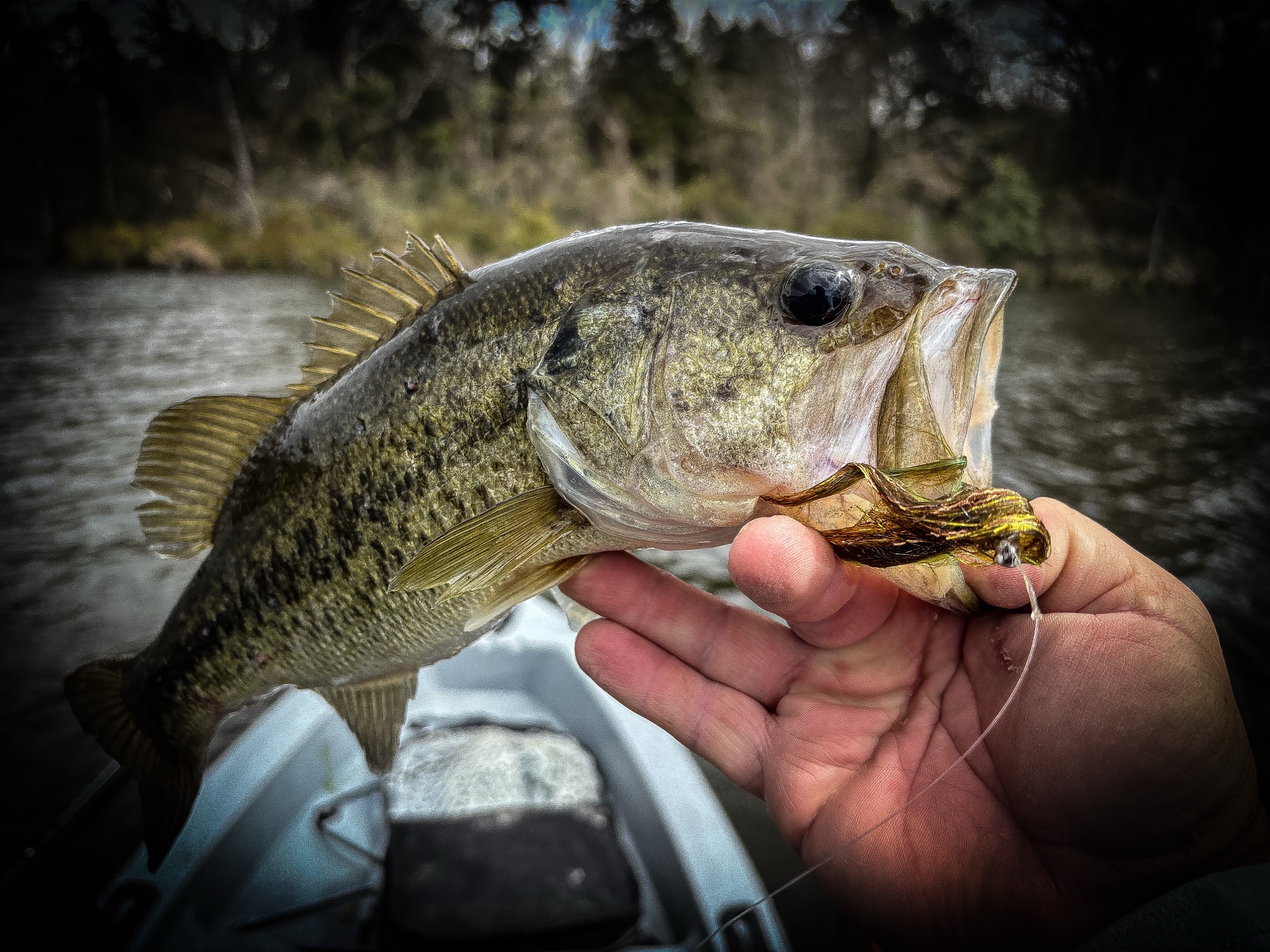
On the fly rod, my double barrel poppers were producing explosions. These are tied on a size 0 hook — a larger profile that pushes water and puts out a serious sound signature. The recipe is deliberate: olive green and damsel green marabou feathers for the body, giving the fly a lifelike breathing action on the pause. The legs are a mixture of yellow, green barred, and orange rubber legs — that color combination reads like a wounded bluegill or a panicked frog. I use green chartreuse Hareline hackle tied in behind the foam head to add even more leg movement and push additional water on each strip.

The key on day one was presentation cadence. Long cast, two sharp strips to pop the head, then a dead stop. Let the legs quiver. That pause is where the eat happens. If you’re stripping topwater poppers without building in a real stop — two to three full seconds minimum — you’re leaving bites in the water.

On the baitcaster, the approach mirrored the fly rod strategy but with different tools. Walking baits and prop baits in shad or chartreuse patterns were producing when worked over the same mid-range structure zones. A H2O Mag Top Water Popper in Bone color or a Rebel Magnum Pop R 3’’ running at a controlled cadence over those open water zones was drawing strikes from fish actively cruising and chasing. The rule is the same regardless of the tool: match the retrieve to the mood, and let the bait do the work on the pause.

By mid-afternoon, both methods were still producing. The overcast sky kept the fish comfortable and in feeding mode all day. Day one ended with numbers and solid fish. We packed up thinking we’d cracked the code.
Day Two: Same Sky, New Playbook
We were back on the water before first light on day two. Conditions looked nearly identical — same partly cloudy cover, similar light wind. We started right where we’d left off.
For the first two hours, the topwater bite was right there. Fish were still responding. I was working my double barrel popper over the same zones, throwing the same cadence, and the fly rod was eating it up.
Then, somewhere around 8 a.m., the bite just stopped.
Not slowed. Stopped. Three casts over a zone that had produced a fish every pass the day before. Nothing. The water surface was unchanged. The weather hadn’t shifted. But the fish had.
This is the moment most anglers lose. They keep doing what worked yesterday and wonder where the fish went. The answer isn’t mystery — it’s depth.
The Shift: Reading When to Go Below the Surface
When topwater dies mid-morning under consistent weather, bass have usually transitioned vertically. They’re still in the same general area, but they’ve moved down. On day two, by 8 a.m., that’s exactly what happened.
On the fly rod, I made the call to drop down to my olive streamer — one of my most reliable bass producers. This fly is built on a size 1 hook, with an olive base blended with chartreuse angel hair flash for lateral line flash that mimics a baitfish in the water column. The large yellow dumbbell eyes serve double duty: they sink the fly and create an up-and-down jigging action on the strip that drives bass wild. The jigging motion you get from heavy dumbbells isn’t just aesthetics — it directly replicates the erratic movement of an injured baitfish trying to stay level.
The retrieve changed from the topwater cadence. Short, sharp strips — strip, pause, strip, pause — letting the eyes bounce the fly off the bottom or hover it just above structure. Within the first few casts near the same point with submerged timber we’d worked on topwater, the bite was back. Fish were sitting tight to structure, maybe three to five feet down, and they wanted something they didn’t have to chase to the surface.
On the baitcaster, the answer was in the box too. I made the transition to a 7- inch shad color worm on a standard worm hook with brass cone weight— a slow, subtle presentation that appeals to the same post-topwater mindset in bass. The brass cone weight keeps the worm nose-down with the tail breathing upward, perfectly imitating a crawfish or baitfish in distress near the bottom. Work it with small wrist shakes rather than big rod sweeps, and keep it glued to structure. Texas-rigged soft plastics are equally effective here — especially darker, natural tones when the water clarifies slightly as the morning matures.
Spinnerbaits are another strong mid-morning option when fish are sitting in that 3–8 foot zone. A tandem willow-leaf in white or chartreuse gives you flash and vibration without burning the presentation past suspended fish.
Midday Deep: The 10-Foot Move
By noon on day two, even the near-structure bite had cooled. Bass had pushed again — this time out to about 10 yards from the bank, suspending in 8 to 12 feet of water. This is where a lot of anglers give up and head in. This is actually where the quality fish live.
On the fly rod, I switched to my second go-to streamer pattern: the same base construction but tied with Hareline orangutan blended with root beer angel hair flash. That darker, warmer color profile — burnt orange against a root beer shimmer — reads differently in deeper water. At 8 to 12 feet, color perception shifts. Natural, earthy tones trigger predatory instinct where bright chartreuse might look unnatural. I run this on a size 2 hook when I want a slightly smaller profile for fish that are keying on smaller bait in deeper zones.

The sink tip on the fly line becomes critical here. Get the fly down before you work it. Count the fly down — six to eight seconds minimum before beginning your retrieve. Then slow, methodical strips with long pauses. Deep bass aren’t chasing. Make the bait look hurt and easy.
On the baitcaster, a deep-diving crankbait in a shad or crawfish pattern allowed me to reach those 8 to 12 foot suspended fish efficiently. A medium-diving squarebill gets you to 6–8 feet, while a long bill crankbait reaches the 10–12 foot zone. Vary your retrieve until you feel bottom contact, then back off. That tick-tick-tick of the bait’s lip dragging structure is what triggers suspended fish.
Carolina rigs with a watermelon red finesse worm are another lethal midday option. The leader lets the worm float up off the bottom while the weight stays in contact — irresistible to fish holding just above the substrate.
Pro Tips: What Most Anglers Miss
Fly angler tip — carry two streamer colors, not four. Decision fatigue on the water kills your focus. Two streamers in contrasting palettes — an olive/chartreuse build and an orangutan/root beer build — cover 90% of conditions. Know when to use each rather than cycling through a full box.
Baitcaster tip — slow down your power phase. Most anglers burn topwater and crankbaits too fast when fish are neutral. Cut your retrieve speed by 30% the moment the bite slows. The fish are still there; your bait is just running past the strike window.
Match hook size to mood. On fire bites, size 0 and 1 streamers move more water and get crushed. On pressured or slow fish, dropping to a size 2 with a more subtle profile can be the difference. The same logic applies on conventional tackle — downsize your profile when fish are post-frontal or under light pressure.
Log your depth shifts. After every slow period, note the depth where the next bite comes. Over time, you’ll see patterns in how fish shift throughout the day under similar conditions on your home water.
Mistakes to Avoid
Abandoning topwater too early. Most anglers pull off surface presentations at the first sign of a slowdown. Give it fifteen minutes. Sometimes fish go quiet for a window and come back. Day two’s early topwater bite lasted two full hours — patience produced fish before the inevitable transition.
Not counting down your fly. If you’re not getting your streamer to depth, you’re not fishing where the fish are. Use a full-sink or sink-tip line and count every cast down before your first strip.
Matching yesterday’s retrieve. Conditions change by the hour. If what worked at 7 a.m. isn’t working at 9 a.m., stop, observe, and adjust. The retrieve that produced yesterday is the exact thing that will make you fishless today if you don’t adapt.
Ignoring the vertical dimension. Most anglers think about where fish are on the X/Y plane — by this dock, near that point. The Z-axis — depth — is where the real adjustment happens. Bass move vertically throughout the day in response to light, pressure, and bait position.
Capturing It All: Photography on the Water
A two-day bass outing under consistent overcast skies is a photographer’s gift. The flat, diffused light of a partly cloudy day eliminates the blown-out highlights and deep shadows that make fish photography difficult under direct sun.
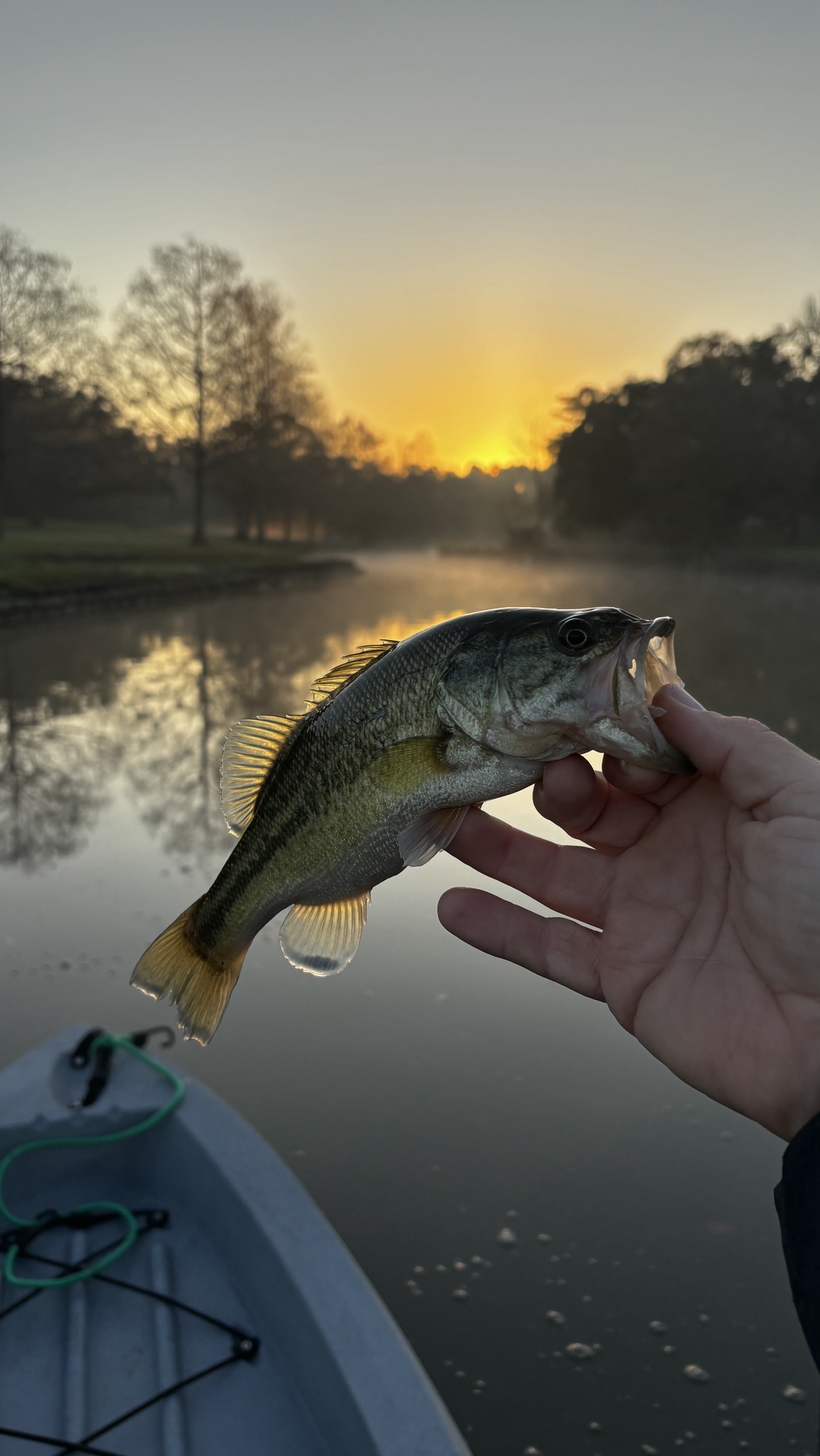
Morning sessions are prime time for capture with the Canon R5. The soft warm light from the east — even through clouds — still carries a directional quality in the first 90 minutes after sunrise. Position the fish toward that light source for natural color rendering on the bass’s lateral stripe and the iridescent green of their flank.

Topwater strikes are among the most dramatic moments in freshwater fishing and almost impossible to capture in the act with a DSLR. Instead of chasing the explosion, set up for the lift — the moment the angler comes tight and the fish breaks the surface for the first time. Anticipate the fight, pre-focus on the rod tip, and shoot bursts at 20fps in electronic shutter mode. The R5’s eye-tracking performs well even on a moving fish in low-contrast water.
Streamer releases in deeper water often happen boat-side. Position yourself so the water behind the fish shows depth — darker tones — rather than the boat hull or a flat sky. A 70–200mm at f/4 gives you enough separation to isolate the fish against that deeper background, creating images that feel like they were taken at depth rather than in six inches of water beside the gunwale.
Fly rod compositions benefit from showing line tension — the slight curve of the rod, the water droplets falling from the fly line on the forward cast, the visual story of the retrieve. These are the images that separate a fishing photo from a fishing trophy shot.
For more on outdoor and fishing photography, visit Beyond the Cast.
The Lesson That Never Gets Old
Two days. Same lake. Same sky. Completely different fish.
The difference between a good day and a blank is almost never about luck. It’s about willingness to observe without ego — to look at the data the water gives you and make a decision that contradicts what worked an hour ago.
Whether you’re reaching for a baitcaster and loading a Carolina rig or picking up the fly rod and switching from a double barrel popper to an olive streamer with dumbbell eyes, the principle is identical: the fish set the agenda, and your job is to keep up.
That’s the kind of fishing that 35 years on the water teaches you. Not just how to cast, or what knot to tie — but how to listen.
If this post helped you think differently about your next bass outing, drop by Beyond the Cast for more tactics built on time — not theory.
And if you want to see the flies, the footage, and the behind-the-scenes of trips like this one, follow Beyond the Cast on Facebook and join the conversation with anglers who take this stuff as seriously as you do.
The fish are out there. Go find them.
Written by Beyond the Cast | Tactics Built on Time. Not Theory.
Category: Bass Fishing
Internal links: Beyond the Cast | Photography + Fishing