Tag: dailyprompt-1920

  • Beyond the Cast: Saltwater Fly Fishing for Redfish and Speckled Trout in Galveston West Bay

    Beyond the Cast: Saltwater Fly Fishing for Redfish and Speckled Trout in Galveston West Bay

    Introduction

    Saltwater fly fishing in Galveston West Bay is one of the most exciting and rewarding ways to target inshore species like redfish and speckled trout. With spring bringing warmer water temperatures and shifting feeding patterns, now is the perfect time to grab your fly rod and explore the marshes, grass flats, and channels of the Texas coast.

    Whether you’re a seasoned fly angler or just getting started with saltwater fly fishing in Galveston, this guide covers everything you need to know—from essential gear and fly patterns to casting techniques and current fishing conditions.

    Essential Gear for Saltwater Fly Fishing in Galveston

    Fly Rod

    A 9-foot, 8-weight fly rod is ideal for targeting redfish and speckled trout. It offers the power to handle wind and cast larger flies while maintaining the finesse needed for accurate presentations. For windy days or larger fish, consider a 9- or 10-weight rod.

    Fly Reel

    Choose a saltwater fly reel with a sealed drag system and corrosion-resistant materials like anodized aluminum. Smooth drag is essential when dealing with the strong, fast runs of redfish or trout hooked in moving water.

    Fly Line

    A weight-forward floating line is the go-to for shallow flats fly fishing. For deeper channels or windier conditions, an intermediate sinking line will help get your fly in the strike zone.

    Leader and Tippet

    Seaguar Red Label Fluorocarbon in 15 lb test is my preferred choice for leader and tippet material. It’s abrasion-resistant and nearly invisible underwater—key for targeting spooky fish in clear coastal waters.

    Best Saltwater Fly Patterns for Redfish and Speckled Trout

    Top Redfish Flies

    Clouser Minnow (Chartreuse/White) – A must-have fly pattern that imitates baitfish.

    Redfish Crack Fly – Perfect for tailing reds in shallow marshes.

    Merkin Crab – A great choice for redfish feeding around oyster beds and muddy bottoms.

    Deceiver (Redfish Colors) – Mimics struggling baitfish, excellent for murky water.

    Puglisi Baitfish Fly – Realistic baitfish profile for sight-casting.

    Top Speckled Trout Flies

    Lefty’s Deceiver (Chartreuse/White) – Proven pattern for trout over grass flats.

    Sea Habit – Effective around structure and drop-offs.

    Whistler Fly (Pink & White) – Perfect for topwater action in warmer months.

    Schminnow – Imitates shrimp and small baitfish.

    Killer Baitfish – Bright colors trigger strikes during low light or murky water.

    Why These Patterns Work

    Each fly pattern is designed to mimic key prey like shrimp, crabs, or baitfish—staples in the diet of redfish and speckled trout. Matching the hatch with realistic movement and size will drastically improve your success rate when fly fishing the Texas coast.

    Saltwater Fly Casting Techniques

    Double Haul Cast

    Mastering the double haul will improve your casting distance and control, especially in windy coastal conditions. Practice it on dry land before hitting the flats.

    Sight-Casting

    Spotting and casting to visible fish is one of the most thrilling aspects of saltwater fly fishing. Aim ahead of cruising redfish or trout to give your fly a natural presentation.

    Redfish tailing in the shallow flats of Galveston West Bay during low tide

    A tailing redfish feeds in the skinny water of Galveston’s flats—prime conditions for sight-casting with a fly rod

    Strip Set

    Instead of lifting the rod, strip-set by pulling the line tight with your non-casting hand. This sets the hook directly into the fish’s mouth without pulling the fly out.

    Best Places to Fly Fish for Redfish & Speckled Trout in Galveston

    Redfish Hotspots

    • Shallow marsh drains on an incoming tide

    • Mud flats near shell and grass beds

    • Potholes along leeward shorelines

    Speckled Trout Zones

    • Grass flats in 3–5 feet of water

    • Shell drop-offs near marsh edges

    • Deeper structure during outgoing tides

    Fly Fishing Retrieve Techniques

    Redfish: Use slow strips with long pauses. If a fish follows but hesitates, stop the fly and twitch gently to trigger a bite.

    Redfish caught in Galveston West Bay using an imitation crab fly, displayed in shallow coastal water

    This redfish crushed an imitation crab fly in the marshy flats of Galveston West Bay—one of the most effective patterns for targeting reds in shallow water

    Speckled Trout: A consistent strip with occasional pauses mimics injured baitfish—perfect for aggressive trout.

    Recent Fly Fishing Report – Galveston West Bay

    Weather & Water Conditions

    Air Temps: Mild spring temperatures

    Water Temps: Mid-60s

    Wind: SE at 5–10 mph

    Water Clarity: Clear in protected marshes; stained on windward flats

    Tide: Incoming morning, outgoing evening

    What’s Working Right Now:

    Redfish: Redfish Crack Fly (tan/gold), Kwan Fly, EP Shrimp

    Speckled Trout: Clouser Minnow, Gurgler Fly, Seaducer

    Last week’s outgoing tides pushed bait into channels where redfish staged along marsh edges. The Clouser Minnow was deadly in 3–5 feet over grass beds, while the EP Shrimp shined for reds tailing over soft mud bottoms.

    Final Thoughts: Fly Fishing the Texas Coast in Spring

    Speckled trout caught on a fly rod in Galveston West Bay during spring fly fishing trip
    Speckled trout landed on the fly in Galveston West Bay—sighted in shallow water and fooled with a chartreuse Clouser Minnow

    Fly fishing for redfish and speckled trout in Galveston West Bay is heating up with spring’s arrival. With improving conditions, longer days, and active fish, now is a great time to target Texas inshore species on the fly.

    If you’re planning a trip this week, focus on early mornings and late afternoons. Look for clean water near current, match your fly to the forage, and practice quiet, accurate presentations.

    Tight lines!
  • Among the Aspens: A Moment in New Mexico

    Among the Aspens: A Moment in New Mexico

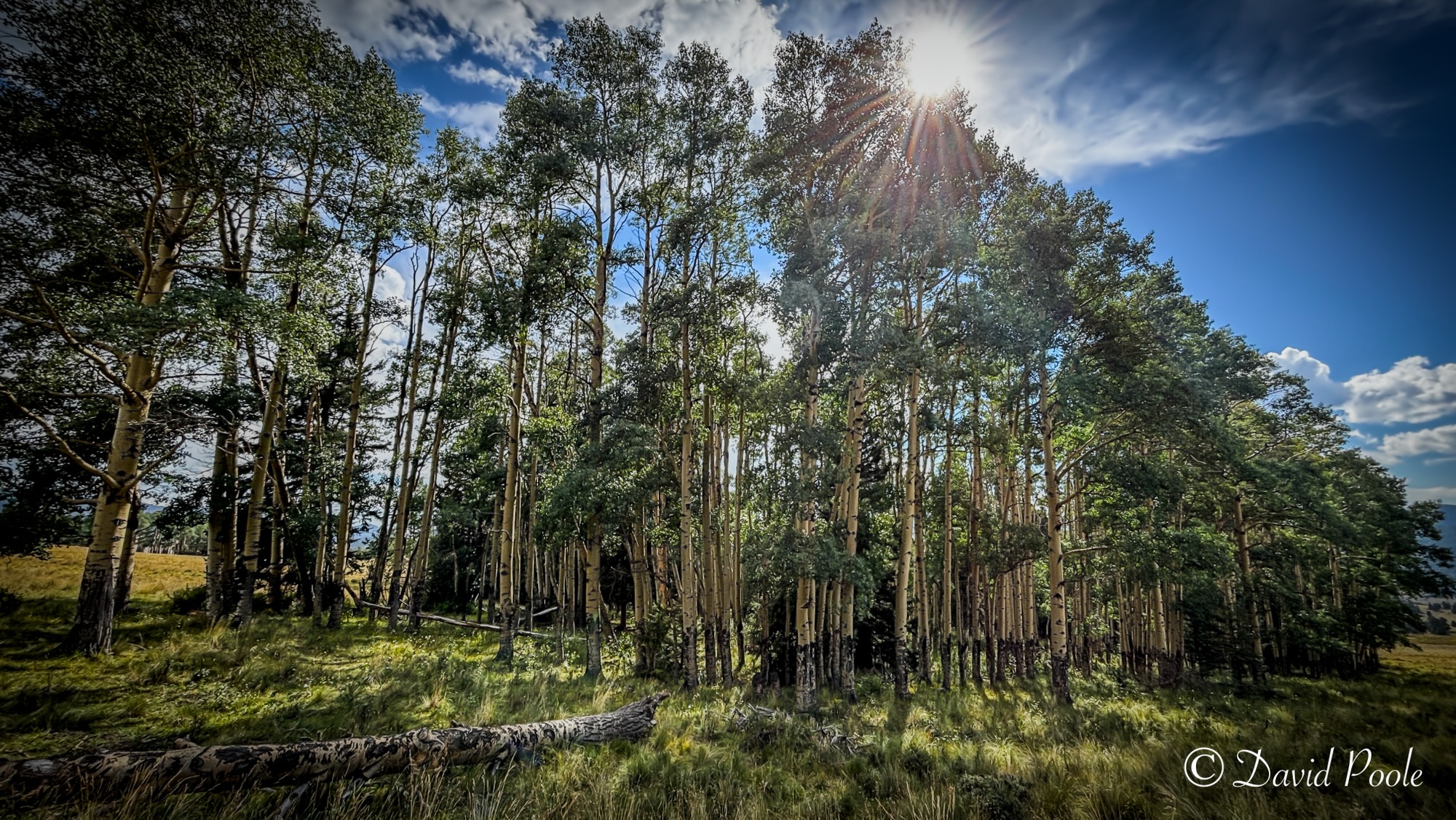
    High in the mountains of New Mexico, I found a glowing grove of quaking aspens just as the sun broke through the canopy. There’s something about these trees — tall, slender, golden-skinned — that draws you in. I came prepared with my Canon 90D, Canon L-series lenses, a K&F Concept tripod, and even my iPhone, knowing this scene was too good to miss from any angle.

    Canon 90D + L Series Glass: Sharpness Meets Versatility

    For wide environmental shots, I relied on the Canon 24–70mm f/2.8L, but for more intimate details — like clusters of bark, layered trunks, or isolating one tree against the backdrop — I used my Canon 70–200mm f/2.8L. This lens gave me the compression and clarity I needed to highlight subtle textures and pull distant trees forward with depth.

    Shot Breakdown:

    • Camera: Canon 90D

    • Lenses: 24–70mm f/2.8L and 70–200mm f/2.8L

    • ISO: 100

    • Aperture: f/10 for wide shots, f/2.8–f/5.6 for close-ups

    • Tripod: K&F Concept Carbon Fiber

    • Filter: K&F CPL

    Using the 70–200mm for Detail and Compression

    Aspens are photogenic both up close and from a distance. With the 70–200mm, I framed tighter compositions — trunks in golden light, black knots in the bark, and sunlit patches on the forest floor. The telephoto compression made the grove look more layered and dense, almost like a wall of trees — which added a cinematic quality to some shots.

    Pro Tip: Use the 70–200mm at 135mm–200mm to compress the forest and fill the frame with repeated lines and patterns — it’s ideal for making the grove feel deeper and more immersive.

    iPhone Photography: Don’t Underestimate Your Pocket Camera

    While the DSLR gear handled most of the heavy lifting, I also snapped a few frames with my iPhone 15 pro. With smart HDR and excellent native contrast, it delivered surprisingly strong results — especially with the wide and ultra-wide lenses.

    Tips:

    • Use portrait mode for foreground subjects like logs or leaves.

    • Tap to meter on the trunk or shadowed mid-tones.

    • If available, shoot in RAW with the Halide or Lightroom Mobile app for better editing flexibility.

    Composition in the Grove: Light, Lines, and Layers

    I timed the main shot so the sun peeked just over the tree line, creating a soft sunburst effect without washing out the scene. A fallen log led into the grove, creating a visual path that made the image feel more three-dimensional.

    With the 70–200mm, I also isolated “portraits” of individual trees and detail shots of light hitting the bark. These close-ups tell a different story — quieter, more focused.

    Editing in Lightroom: Preserving Natural Mood

    For Canon RAW files:

    • Boosted midtone contrast with the tone curve.

    • Desaturated greens slightly for a more natural forest feel.

    • Lifted shadows to expose bark detail.

    • Used radial filters to add subtle spotlighting where the sun naturally fell.

    Before and after

    For iPhone shots:

    • Adjusted highlights and whites to bring back sky detail.

    • Used Lightroom Mobile’s “Texture” slider to enhance bark detail.

    • Applied slight vignette to draw the eye inward.

    Why Aspen Trees Are a Photographer’s Dream

    Aspens offer built-in symmetry, light diffusion, and contrast. The bark’s pale tones pop in shadowy groves, while the leaves filter sunlight with a soft glow. In New Mexico’s higher elevations, these trees are often found in wide open clearings — perfect for both drone and ground photography.  What makes them even more special is their shared root system, meaning this forest is often one living organism — a fact that adds a bit of wonder every time I step into a grove.

    Closing Thoughts: Slow Down, Look Closer

    Photographing aspens is a study in rhythm and reflection. Whether you’re standing back with a 24mm or zooming in at 200mm, these trees offer something ethereal. And whether you’re carrying a full kit or just your phone, the forest rewards those who pause, observe, and frame with care.

  • “Beyond the Trail: Adventures in Fly Fishing, Photography, and the Backcountry”

    “Beyond the Trail: Adventures in Fly Fishing, Photography, and the Backcountry”

    What topics do you like to discuss?

    Exploring the backcountry through fly fishing, photography, hiking, and travel, I seek out remote rivers, hidden trails, and wild landscapes — capturing each adventure through the lens and the line. Whether chasing trout in alpine streams or hiking rugged terrain to untouched waters, every journey is a blend of exploration, creativity, and connection with nature.