Tag: dry fly fishing

  • Part Two: Same River, Different Conditions — Adapting Dry Fly Tactics to Cloudy Water and Higher Flows

    Part Two: Same River, Different Conditions — Adapting Dry Fly Tactics to Cloudy Water and Higher Flows

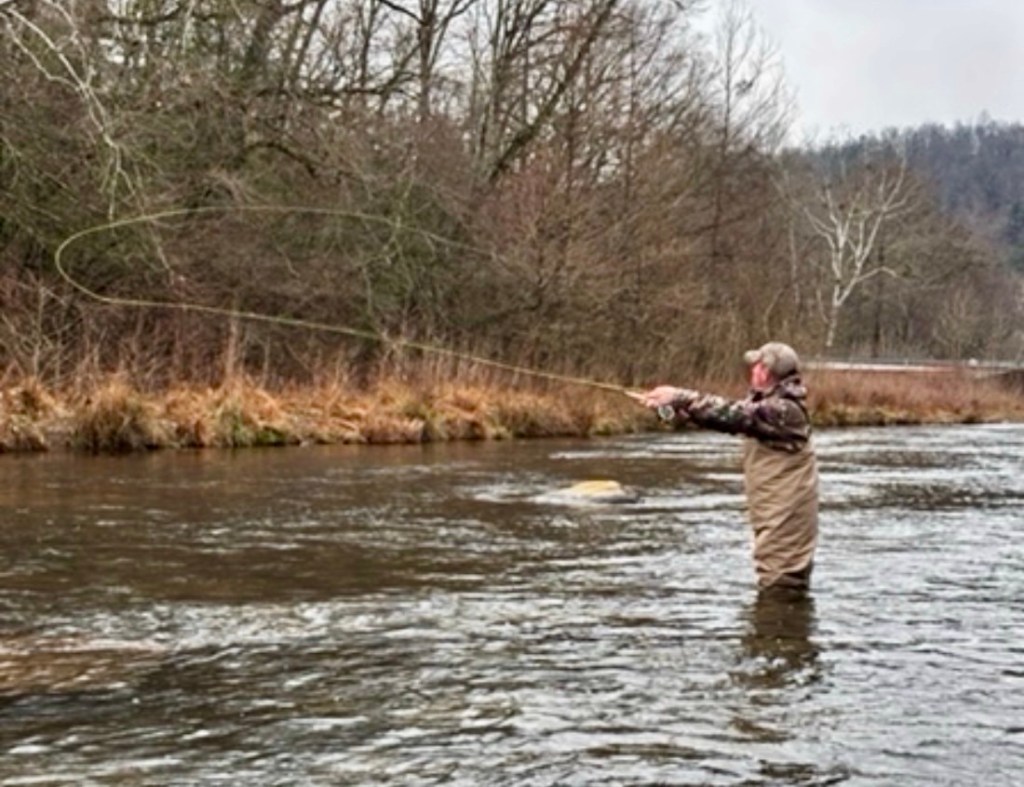
    If Part One was about precision, restraint, and subtle adjustments, this day on the river demanded the opposite.

    As the river changed, so did the results. What really stood out was that my brother started catching more trout. That forced me to pause and study what he was doing differently instead of stubbornly sticking to my approach. His drifts were cleaner. His fly was riding naturally with less drag. And most importantly, he was targeting slightly softer water than I was — just off the heavier current, where trout could hold comfortably in the higher flows without expending unnecessary energy.

    That adjustment was the turning point. In cloudy water and elevated flows, trout shift into protection mode. They slide into seams, softer edges, and subtle pockets that are easy to overlook. Watching him find success reminded me that adapting isn’t just about changing flies — it’s about changing perspective. Sometimes the biggest lesson on the river comes from paying attention to what’s working right beside you.
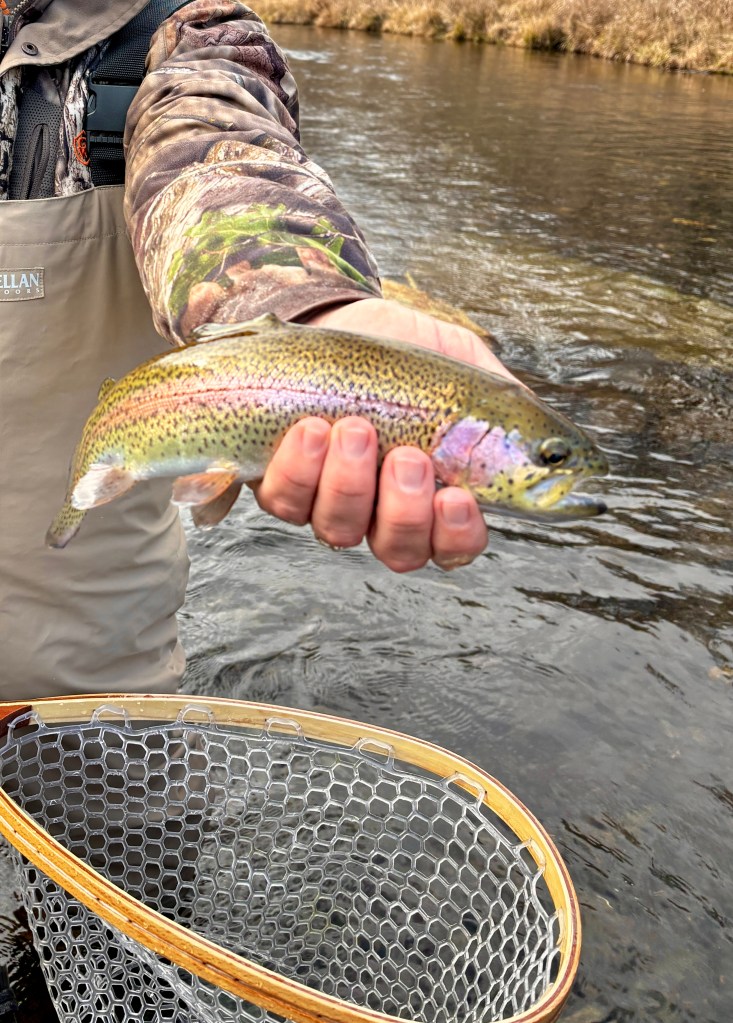
    Same river. Completely different game.

    This is where understanding conditions over patterns becomes critical.

    Reading the River Again: What Changed With Higher CFS

    Higher flows reshape a river fast.

    With increased CFS:

    • Seams widen and shift

    • Soft water becomes more valuable

    • Fish slide closer to structure and edges

    • Feeding lanes compress instead of spreading out

    Instead of holding in obvious mid-river seams like before, trout positioned themselves tighter to:

    • Inside bends

    • Cushion water behind rocks

    • Softer edges just off the main current

    Fish were still feeding—but they were doing it more opportunistically than selectively.

    Cloudy Skies and Stained Water: Visibility Becomes the Priority

    Under cloud cover and reduced visibility, trout don’t inspect flies the same way they do in clear, bright conditions.

    This changes everything.

    On this day:

    • Fish had less time to analyze a fly

    • Movement and visibility mattered more than perfect imitation

    • Drift was still important—but forgiveness increased

    Instead of downsizing, I leaned into flies that:

    • Rode a little higher

    • Had more contrast

    • Were easier for fish to track in broken water

    The exact match mattered less than the fly being noticeable and natural.

    Dry Fly Presentation in Faster, Dirtier Water

    Higher flows don’t eliminate dry fly opportunities—but they do change how you approach them.

    Key adjustments:

    • Shorter, more controlled drifts

    • Targeting specific soft pockets instead of long seams

    • Letting the fly land with intention, not delicacy

    In this water, trout weren’t sipping calmly—they were making quick decisions. The goal was to put the fly where they could see it and eat it without expending unnecessary energy.

    Tippet, Leader, and Confidence Adjustments

    Unlike the clear-water conditions from Part One, this wasn’t the time to go ultra-light.

    With more color in the water and less direct light:

    • Slightly heavier tippet didn’t hurt takes

    • Fly control improved

    • Hook sets were more confident in faster current

    This was a reminder that there’s no universal “best” setup—only the best setup for right now.

    Why the Same Fly Can Fail—or Succeed—Depending on Conditions

    One of the biggest takeaways from fishing the same river under different conditions is understanding that flies don’t work in isolation.

    A fly that felt too visible or unnatural in clear water suddenly became effective when:

    • Light was reduced

    • Water speed increased

    • Fish shifted from selective feeding to opportunistic behavior

    The pattern didn’t change—the context did.

    This reinforces a key lesson:

    Choosing a fly isn’t just about the hatch. It’s about water clarity, flow rate, light, and fish positioning.

    Slowing Down Still Matters—Just in a Different Way

    Even in tougher conditions, the solution wasn’t to rush or fish blindly.

    It meant:

    • Watching where fish positioned themselves

    • Adjusting target zones

    • Fishing fewer spots more intentionally

    Instead of long observation of insect life, the focus shifted to water movement and structure.

    Different inputs. Same mindset.

    Part Two Takeaway: Conditions Dictate Strategy

    This day on the river proved something important:

    The fundamentals don’t change—but how you apply them must.

    Clear water demands subtlety.

    Higher water demands visibility and control.

    Bright days punish mistakes.

    Cloudy days forgive—but still require intention.

    Understanding those shifts is what separates anglers who adapt from those who rely on habit.

    Coming Up Next in the Series

    In the next part of this series, we’ll dive deeper into:

    • When to abandon the dry fly altogether and streamer tactics

  • Part 2: Into the Pines — Hiking to the La Plata River with a Fly Rod and a Camera

    Part 2: Into the Pines — Hiking to the La Plata River with a Fly Rod and a Camera

    There’s something about hiking into trout water that changes the whole rhythm of a trip. You leave behind the road noise, the cell signal, the crowded pull-offs—and start tuning into the sound of the wind through lodgepoles and the hush of a river just over the next rise. That’s what drew me to the La Plata River, tucked into a quiet stretch of high country in Southwest Colorado. Part fishing trip, part photo expedition—this was a day I won’t forget.

    Starting the Hike: Pines, Shade, and Altitude

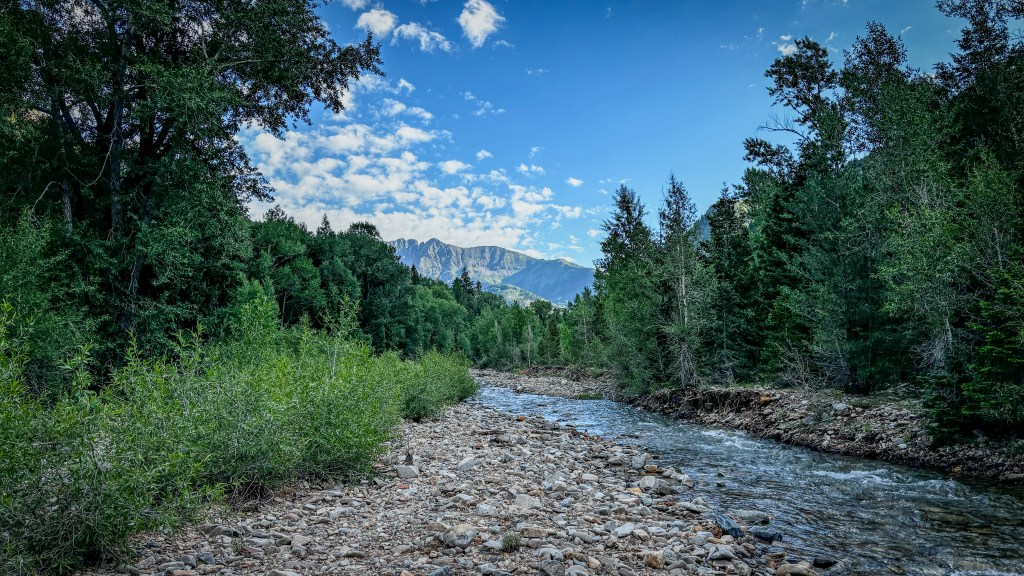
    The La Plata River trailhead isn’t flashy. It starts modestly with a dirt pull-off and quickly dips into shady pine groves. The trail follows the contour of the valley with occasional glimpses of the river down below. What makes this hike special isn’t just the destination, but the quiet, ever-changing terrain: groves of aspen, mossy boulders, and alpine meadows dotted with summer wildflowers.

    With my K&F Concept camera backpack strapped tight and a 4wt fly rod rigged up and ready to go, I eased into a slow pace, letting my eyes adjust to the light and scanning the trail for photo moments—a glint of water through the trees, a mule deer in the brush, shafts of light through pine needles.

    Wildflowers and Wildlife: Photography on the Move

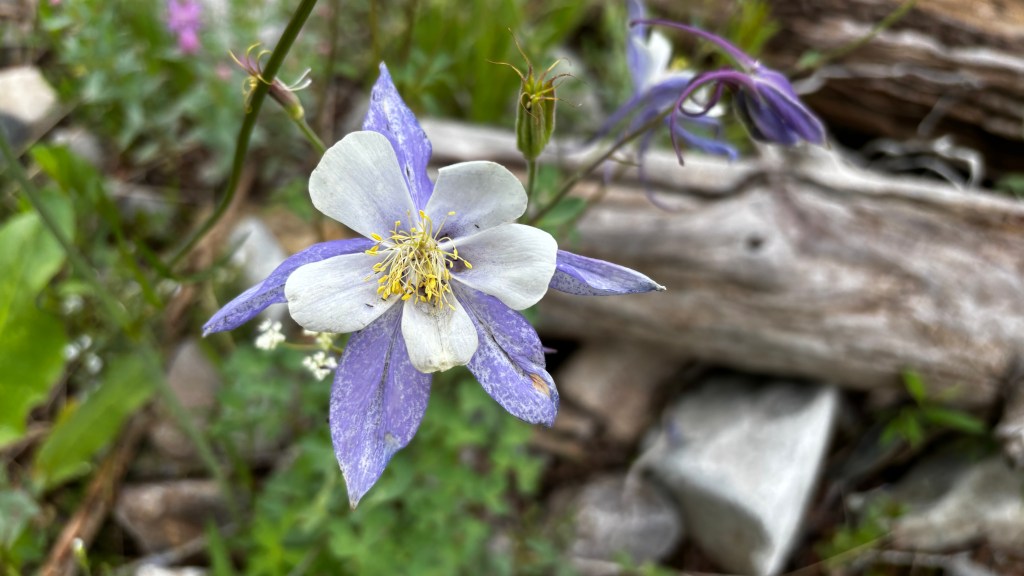
    Early summer in this part of Colorado is a photographer’s dream. Bright orange Indian paintbrush, purple columbines, and patches of lupine lit up the trail edges. I switched to my 24–70mm lens, using a low angle to capture the pop of color against the green pines.

    Light is everything here. I used a circular polarizer to punch up the color and reduce glare when shooting near water. My Canon R5 handled the dynamic light shifts like a champ—especially when a young mule deer stepped out into a clearing, perfectly backlit, right as I crested a ridge.

    First Glimpse of the River

    About two miles in, I heard it before I saw it. The La Plata winds through tight canyons and then flattens into glassy, slow runs bordered by grassy banks. I dropped my pack, switched into my wading shoes, and tied on a #14 Yellow Stimulator with a Beadhead Pheasant Tail dropper.

    The water was crystal clear—trout country through and through.

    Stealth and Strategy: Small Water Fly Fishing

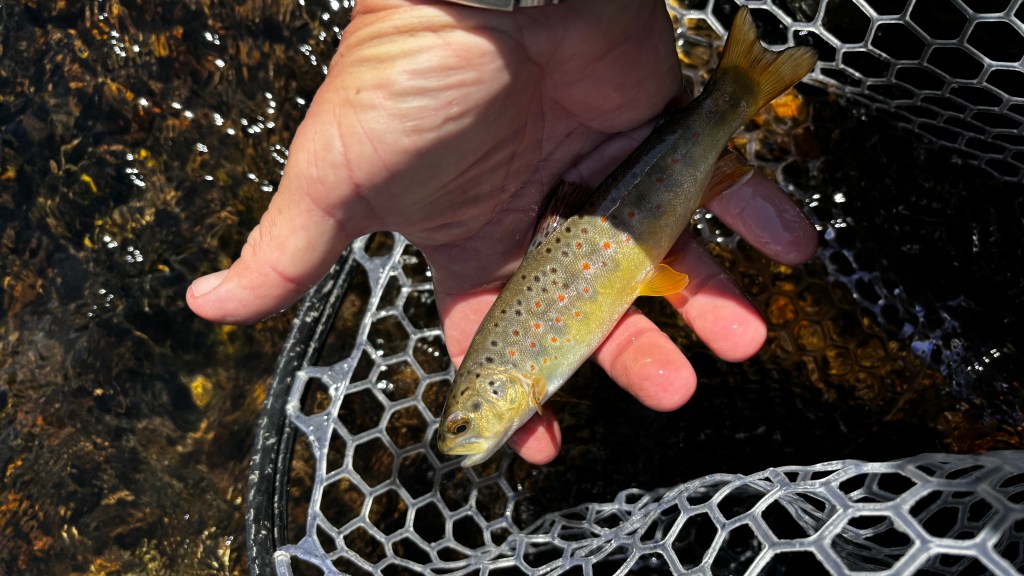
    Fishing the La Plata is a finesse game. These are wild fish, likely never hooked, and they spook at shadows. I crouched low, casting upstream into shady runs and behind midstream boulders. Several small browns darted for the fly but refused last second. On a good drift, the dropper disappeared and I brought in my first fish of the trip—a buttery brown trout with fire-orange spots. I paused for a quick photo with the fish hovering just above the net, backlit by the sun.

    I love these moments—the stillness, the soft light, the ripple of success after a quiet approach. The fish here aren’t big, but they’re beautiful and strong.

    The Midday Light Shift

    By midday, the lighting got harsh—tougher for photos, but perfect for exploring. I shot reflections along a wide bend of the river, switching to a 70–200mm lens to compress layers of pine ridges and storm clouds moving in.

    Back at a mossy boulder overlooking a slow pool, I set up my tripod for a long exposure of the water sliding through rocks. These are the frames I love—where fly fishing meets fine art photography.

    Safety First in the Backcountry

    Clouds started to build, as they often do in Colorado’s high country. I kept my eye on the sky, wrapping up fishing and heading back toward the trailhead before the afternoon storms rolled in. That’s one lesson I’ve learned: no fish is worth getting caught in a lightning storm above 9,000 feet.

    On the hike out, I paused one last time to shoot the fading light over the valley, grateful for a day that felt more like a retreat than a mission.

    Tips for Fishing & Photographing the La Plata River

    Start early: For soft light and calm water, hit the trail before sunrise.

    Use a dry-dropper rig: Small dries like Stimulators or Elk Hair Caddis paired with beadhead nymphs are deadly.

    Pack light, but smart: The K&F backpack let me carry camera gear, fly gear, food, and a rain shell without overload.

    Bring a polarizer: It transforms mid-day shots and makes colors pop.

    Shoot with purpose: Capture the fish, but also the landscape, light, and journey—it tells the full story.

    This hike into the La Plata River reminded me why I chase these moments—where the line between fishing and photography disappears. The sound of moving water, a trout rising to a dry, and the snap of the shutter are all part of the same rhythm.

    Up Next: Part 3 — Chasing Trout and Light on the Pine River Trail