
Why Lure Profile Usually Outperforms Color
Introduction: Is Lure Color Overrated?
One of the biggest debates in fishing is whether color or profile matters more when choosing the right lure. Anglers obsess over color patterns and shades, but on my most recent trip, the fish made something very clear:
Profile — not color — was the deciding factor in getting consistent bites.
This wasn’t theory. It was proven in real-time on the water, with multiple species reacting the same way.
My Recent Trip: When Lure Profile Changed Everything
Testing Color vs Profile in Real Conditions
Early that morning, conditions were perfect:
light wind, active bait, and solid tide movement. I started cycling through several confidence lures—different colors, brands, and patterns—trying to figure out what the fish were keyed in on.
Nothing. No bumps. No followers.
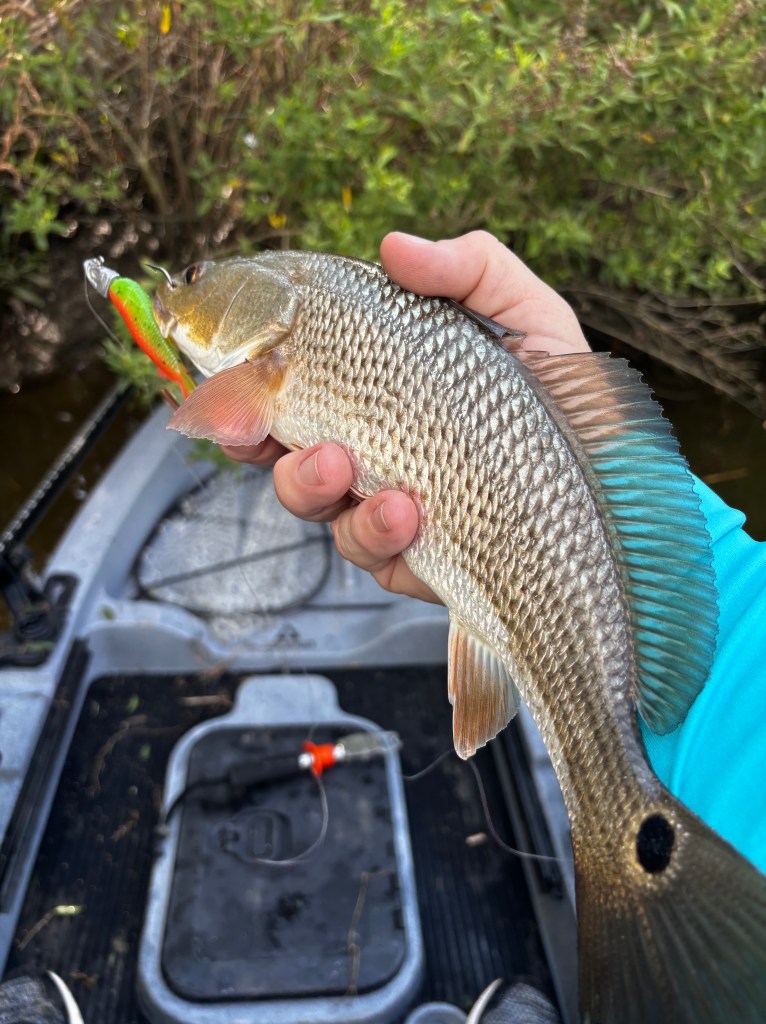
Then I tied on a 3.5-inch lure with a very specific curling tail profile, and suddenly everything clicked.
• Redfish crushed it.
• Speckled trout inhaled it.
• Bass even came out of grass lines to hit it.
The results were so dramatic that I had to start testing it scientifically.
Experiment #1: Changing the Color Only
I swapped the lure to a completely different color while keeping the same profile.
No strikes. No follows. Nothing.
This is where most anglers would assume the “hot color” stopped working—but the fish were telling a different story.
Experiment #2: Changing the Profile Only
I rigged a totally different style of bait.
Same general size, different tail and action.
Zero interest.
This confirmed it: the lure profile was the key factor.
Experiment #3: Returning to the Original Profile
I tied back on that same 3.5-inch curling-tail lure, even in a neutral color.
Instant bites again.
Redfish hit it hard. Trout slammed it. Bass reacted immediately.
The verdict?
The fish weren’t feeding based on color — they were feeding based on silhouette, size, and action.
Why Lure Profile Matters More Than Color
1. Predators Recognize Shape Before Color
Most fish identify prey by:
• outline
• movement
• size
• action
Color is often the last factor they respond to, especially in stained or moving water.
2. Tail Action Mimics Real Forage
The 3.5-inch curling tail produced the exact swimming motion of the baitfish that were active that morning.
Matching the action is essential when fish are selective.
3. Correct Size = Matching the Hatch
This is classic match-the-hatch fishing.
When the real forage is 3–4 inches long, using a 5-inch lure takes you out of the natural food window.
4. Water Conditions Reduce Color Visibility
In anything other than crystal-clear water:
• silhouettes stay consistent
• colors wash out quickly
• movement becomes the true trigger
That’s why profile wins.
What Each Species Taught Me About Lure Profile
Redfish
Redfish responded aggressively to the lure’s side-to-side kick and size, likely matching small mullet or pinfish.
Speckled Trout
Trout hit the lure mid-column, reacting to the fluttering tail and wounded baitfish movement.
Bass
Even freshwater bass reacted strongly to the same profile, following it out of grass lines and ambushing it.
Different environments, same instinct:
If the silhouette matches prey, fish eat with confidence.
Angler Tips: How to Pay Attention to What Fish Are Feeding On
1. Observe Local Baitfish
Ask yourself:
• How big are the baitfish?
• What shape are they? Slim? Tall-bodied?
• Are they schooling or scattered?
• Do they swim with vibration, glide, or dart?
These clues tell you which lure profile to use.
2. Match the Tail Action
• Curling tails → mimic shad, mullet, small minnows
• Paddle tails → high vibration, great for dirty water
• Straight tails → subtle action for pressured or cold-water fish
Profile + action matters more than color every time.
3. Change Shape Before Changing Color
Most anglers change color first—and lose time.
Instead, try adjusting:
• length
• body thickness
• tail style
• swimming action
You’ll learn much faster what fish are keyed in on.
4. Study What Fish Spit Up
If a redfish or trout spits up bait when you land it:
• look at the size
• note the shape
• compare it to your lure
That’s your exact “match-the-hatch” blueprint.
5. Keep a “Control Lure” in Your Box
Once you find a productive profile, treat it as your baseline.
Only test one variable at a time for clear results.
The Final Takeaway
This trip proved what many seasoned anglers know but don’t always practice:
Color can fine-tune the bite — but profile determines whether fish strike at all.
The 3.5-inch curling-tail bait matched the exact prey profile fish were feeding on that day. When I switched off that profile, the bites stopped. When I returned to it, the action turned on instantly.
Next time you’re struggling or experimenting, don’t reach for a new color first.
Match the size.
Match the shape.
Match the action.
Color comes last.
 Beyond the Cast