Tag: lessons

  • January Fly Fishing in Broken Bow, Oklahoma: Winter Streamer Tactics for Big Rainbow Trout

    January Fly Fishing in Broken Bow, Oklahoma: Winter Streamer Tactics for Big Rainbow Trout

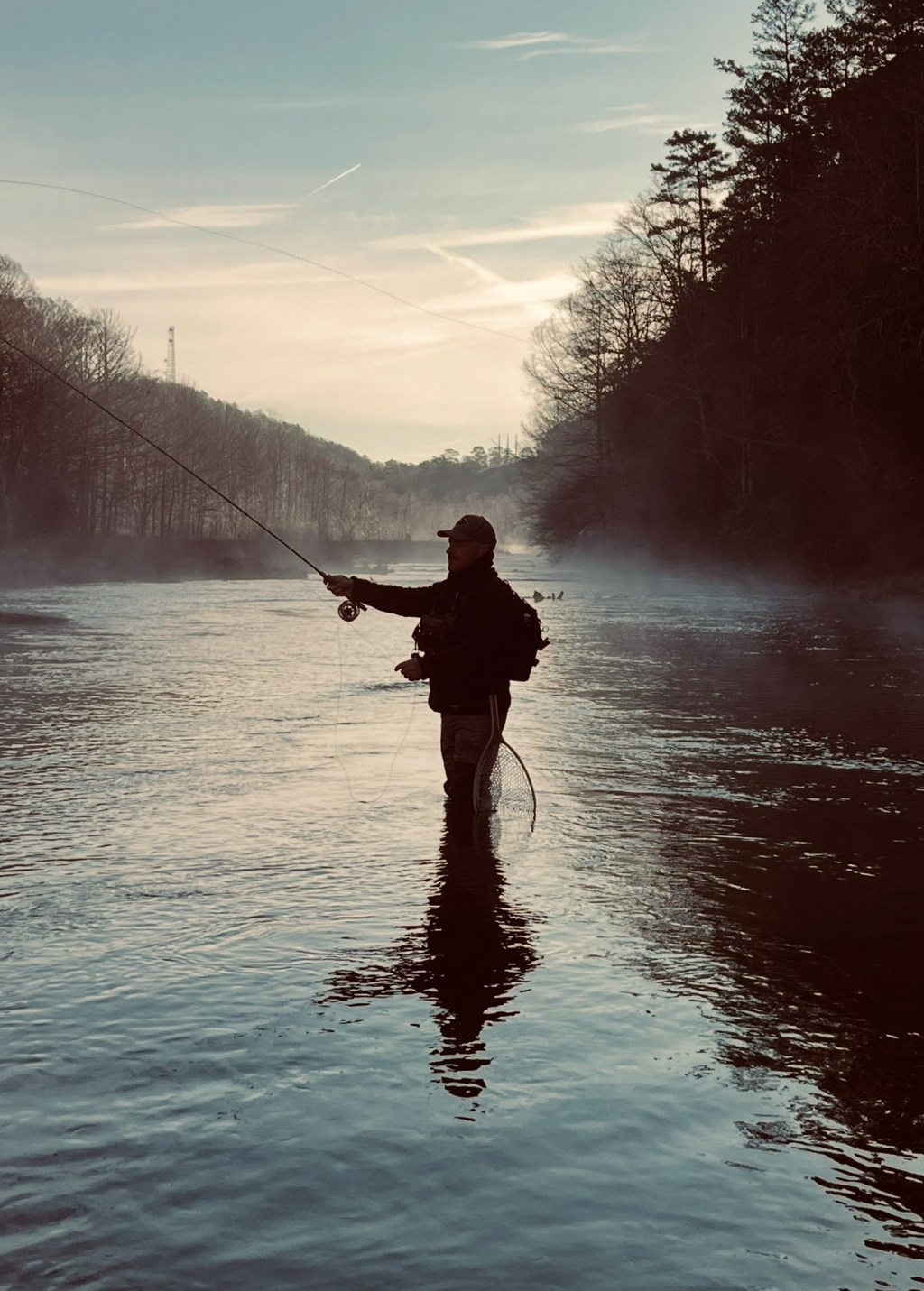
    January in Broken Bow, Oklahoma, is one of those trips that tests your patience—and rewards it if you’re willing to adjust. Cold mornings, cold water, and plenty of anglers on the river. This trip was a perfect reminder that winter fly fishing is less about forcing a pattern and more about reading the water, adapting your tactics, and committing to what the conditions are telling you.

    Winter Conditions on the Lower Mountain Fork River

    Most days started with air temps in the 30–40° range, and water temps hovered in the low-to-mid 40s. Some days were overcast with that soft winter light that feels fishy all day long, while others were bright and clear, putting the fish on edge—especially with moderate to heavy fishing pressure.

    These conditions made trout less willing to move far for a meal. They weren’t looking up much, and they definitely weren’t chasing flies across the river. Everything about the water screamed slow, deliberate, and close to structure.

    Starting with Dry Flies in Winter Conditions

    Like most trips, I started optimistic—throwing dries during the warmer parts of the day. While there were occasional looks and a few half-hearted rises, dry fly action was limited. Winter bugs were sparse, and any surface activity was short-lived.

    That’s when the switch needed to happen.

    Committing to Streamers:

    Once I stopped fishing dries and committed to streamers, the entire trip changed.

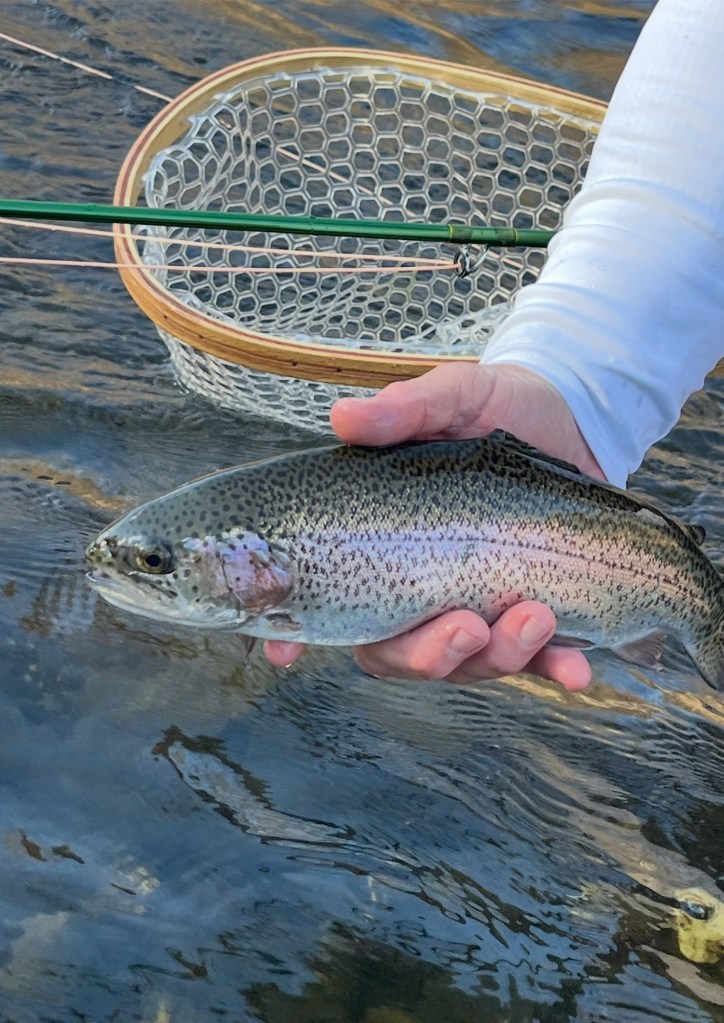
    The fly that consistently produced was a damsel green olive marabou streamer. Simple profile, tons of movement, and just enough flash to get noticed without spooking pressured fish.
    Why It Worked

    In cold water, trout don’t want to waste energy. That marabou breathed with the current, even on slow swings, making the fly look alive without aggressive stripping. The color matched winter forage well, and the subtle action triggered reaction strikes rather than feeding strikes.

    Reading the Water: Finding Winter Trout on the Lower Mountain Fork

    The key wasn’t just the fly—it was where and how it was fished.

    Seams and Soft Edges

    Most of the better fish came from seams, especially where faster water dumped into slower runs. I focused on:
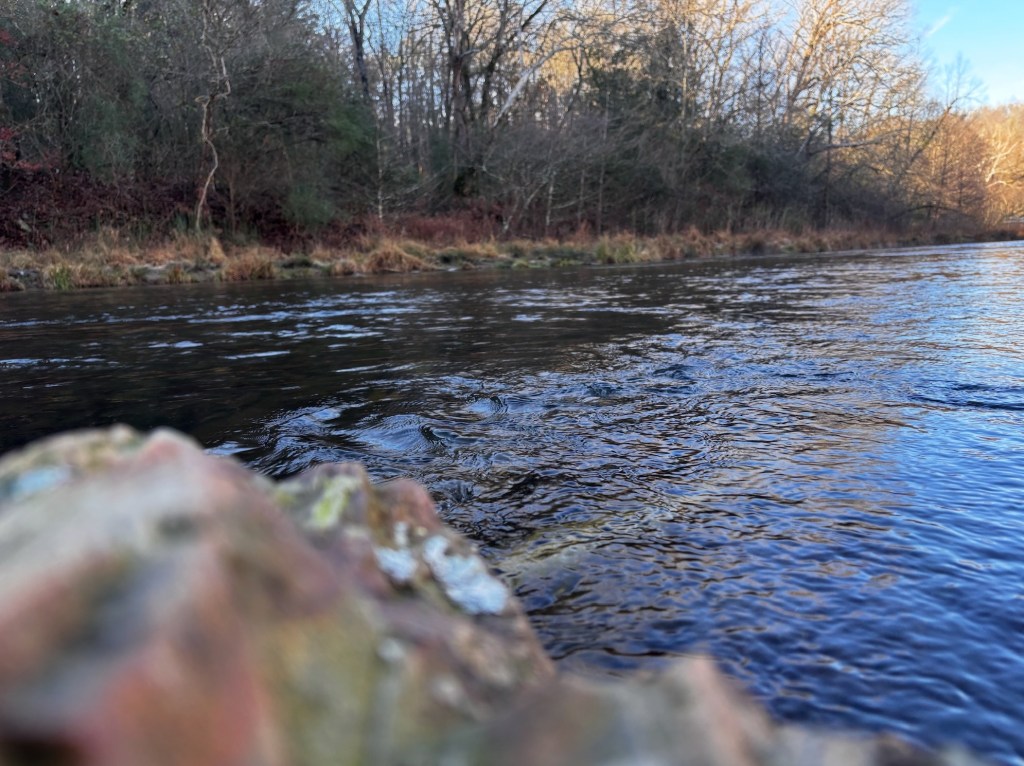
    • The inside edge of seams

    • Transitions from riffles into deeper runs

    • Water where fish could sit comfortably and let food come to them

    Casting across the seam and allowing the fly to swing naturally through that transition zone was deadly.

    Big Boulders and Structure

    The Lower Mountain Fork has plenty of large boulders, and in winter, those rocks are prime holding water.

    I targeted:

    • The downstream side of boulders

    • Slight depressions created by current wrapping around structure

    • Soft pockets directly behind rocks where trout could rest

    These spots consistently held bigger rainbows, especially when other anglers walked right past them.

    The Streamer Swing: Keeping a Tight Line for Reaction Strikes

    One of the biggest producers on this trip was keeping constant tension on the line.

    Instead of stripping aggressively, I let the streamer swing under tension, rod tip slightly downstream. That tight line did two things:

    1. It let the marabou pulse naturally in the current

    2. It allowed me to feel subtle takes instantly

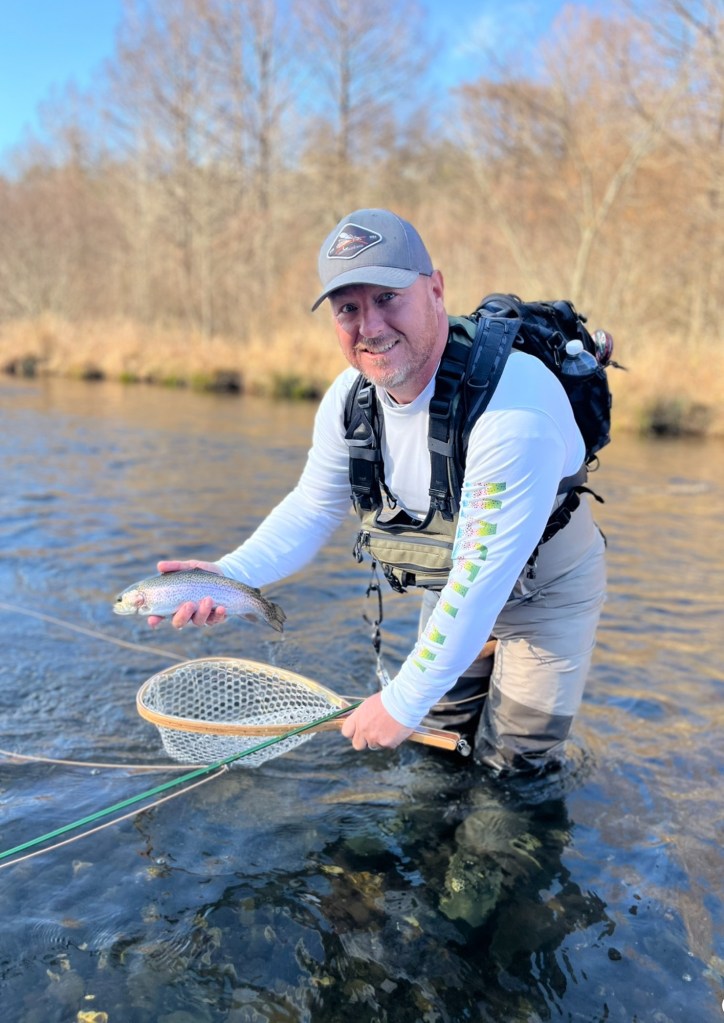
    Most strikes happened mid-swing or right as the fly started to straighten out below me. Big rainbows would crush the fly with intent—it wasn’t subtle when it happened.

    Beating Fishing Pressure on the Lower Mountain Fork River

    Even on crowded days, this approach produced more bites and better fish than what I saw around me. While others were cycling flies or pounding the same obvious runs, slowing down and working structure paid off.

    Winter trout aren’t everywhere—but when you find them, they’re usually grouped up and willing to eat if you present the fly correctly.

    Final Takeaways from January Fly Fishing in Broken Bow, Oklahoma

    This trip reinforced a few winter fly fishing truths:

    • Cold water means less movement, not no movement

    • Streamers shine when surface activity fades

    • Structure and seams are non-negotiable in winter

    • Keeping a tight line on the swing triggers reaction bites

    Broken Bow in January isn’t about numbers—it’s about dialing in tactics and being patient enough to let the river show you where the fish live. When it all comes together, those cold-weather rainbows make every frozen finger worth it.

    If you’re heading to Broken Bow this winter, don’t be afraid to put the dries away and let a streamer do the talking.
  • Reflection

    Reflection

    An hourglass reminds me how fleeting time truly is. Each grain represents a moment passing — quiet, irreversible, and precious. It’s a simple but powerful symbol that urges me to slow down, live intentionally, and value the present before it slips away.

    Lately, I’ve been thinking a lot about time. How fast it moves. How quietly it slips by while we’re busy—distracted, scrolling, rushing, chasing the next thing.

    I’ve been missing people I can’t call anymore. Pets that used to greet me at the door. Moments I didn’t realize were “the last” until they were already gone. And I think we all carry that—those little pieces of love and loss, tucked somewhere behind our day-to-day thoughts.

    But out in nature—on a trail, rod in hand, camera slung over my shoulder—it gets quiet. Not just around me, but in me. The noise fades. The expectations, the stress, the screens… all of it disappears behind the sound of wind through trees or water over rock.

    And in those moments, I feel peace. I feel connected to everything I’ve lost, and even more thankful for what I still have.

    Like quiet mornings with my wife—just the two of us, sharing coffee before the world wakes up. No rush, no plans, just simple presence. Those little moments mean everything. They’re grounding. They’re real.

    It reminds me to be more intentional with my time—to show up fully for my family, to listen deeper, to appreciate the now. Because we only get so many mornings, so many trails, so many shared cups of coffee.

    So I hike. I fish. I breathe it all in. I hold on to what matters. Because one day, these moments will be the memories we reach for—and I want mine to be full of peace, love, and presence.

    -David

  • Easter Reflection: A Quiet Holiday, Remembering Family, and Embracing Simpler Traditions

    Easter Reflection: A Quiet Holiday, Remembering Family, and Embracing Simpler Traditions

    By David Poole

    This Easter looked different for me. I spent the holiday working, far from home, and away from the usual Easter celebrations with family. It wasn’t the Easter of big gatherings, shared meals, and laughter—it was quieter, more reflective. Still, in that stillness, I found something meaningful.

    Working on Easter and Missing Family Traditions

    Spending Easter away from family gave me the space to think back to simpler times. I remembered childhood Easters—waking up to the smell of coffee and breakfast, searching for eggs in the yard, and spending the day surrounded by the people I love. Those memories are a reminder of what really matters during the holidays: connection, tradition, and time well spent.

    Remembering Loved Ones No Longer With Us

    As I reflected on past holidays, I thought of the family members who are no longer here. The holidays always bring their absence into sharper focus, but also their lasting influence. Their stories, warmth, and laughter still live in the traditions they helped create. Remembering them is part of keeping those memories alive.

    Spring Transition: A Natural Reminder of Renewal

    Even while working this Easter, I could feel the signs of the spring transition—green leaves emerging, wildflowers blooming, and longer daylight stretching across the day. Spring reminds us of change, renewal, and hope. It encourages us to pause and notice the beauty in the everyday.

    Continuing Family Traditions and Creating Meaningful Moments

    Being away from family made me think about the importance of keeping traditions alive—not only to honor the past but to create new memories for future generations. Whether it’s a simple meal, a walk outside, or telling stories from the past, these small moments become part of something much bigger.

    Living a Life Full of Meaning

    Holidays like Easter are a good reminder to slow down and live with intention. Even when we can’t be with family or celebrate the way we used to, we can still carry the meaning of those traditions in our hearts. It’s about creating a life full of meaning—one rooted in reflection, love, and simplicity.

    Easter can also be a time to reflect on personal growth, hope, and spiritual renewal

    Conclusion: Carrying Easter Forward in Simpler Ways

    Whether you’re working this Easter, spending it solo, or surrounded by family, take a moment to reflect. Think of the loved ones who shaped you, the traditions that bring comfort, and the fresh start that spring brings. We may not always celebrate the same way, but the heart of the holiday remains—connection, remembrance, and living a meaningful life.

    Wishing you all a season full of reflection, simplicity, and moments that truly matter.

    —David


    A long-haired desert rabbit rests quietly among the scrub brush, wildflowers, and cactus—perfectly camouflaged in the spring landscape of the Southwest