
If the Animas River is a bold, rushing conversation, the Dolores River speaks in whispers. Tucked between the slopes and canyons of Southwest Colorado, this river winds through rugged terrain, shifting between dense forest, rocky cliffs, and sage-covered meadows. It’s a place of stillness, where every bend feels like it belongs to you—and the browns that live here feel like a gift you earn, not a prize you chase.
The Approach: Getting to the River
The upper Dolores is more remote than it looks on the map. Depending on where you go—above McPhee Reservoir or toward the West Fork—you’ll wind down forest service roads, sometimes dodging rockfall or puddles from last night’s rain. I pulled off just before sunrise at a bend that looked promising. No signs, no crowds, no footprints in the sand.
I geared up quickly: 9’ 4wt rod, Sage Spectrum C reel, floating line with a long 5x leader. I grabbed my K&F Concept camera pack, Canon R5, and my Sigma 24–70mm lens to start, knowing the early light would be soft and perfect for river compositions.
Quiet Water and the First Cast
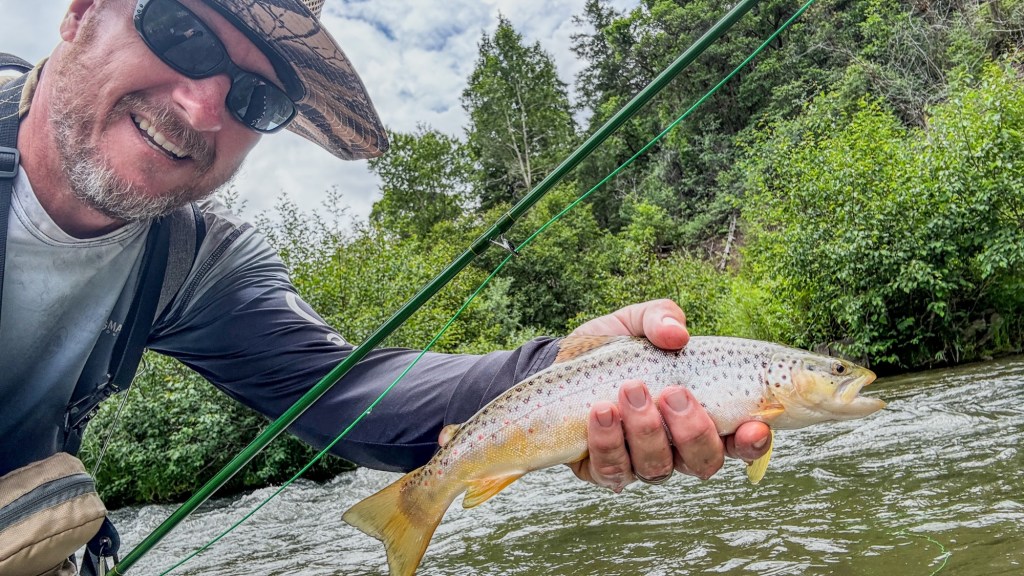
The Dolores at this stretch was gentle—glasslike pools framed by golden willows, with the occasional riffle tumbling over polished rocks. I rigged a single dry: a #16 tan Elk Hair Caddis, and started casting upstream into the seams. The fish here weren’t picky, but they were spooky. Long leaders and slow movements were the name of the game.
The first brown came from under an overhang, perfectly camouflaged against the river bottom. I crouched low, played it gently, and then paused to shoot—kneeling at water level to capture its golden flanks against the mirror-like pool behind it.
Photographing Solitude
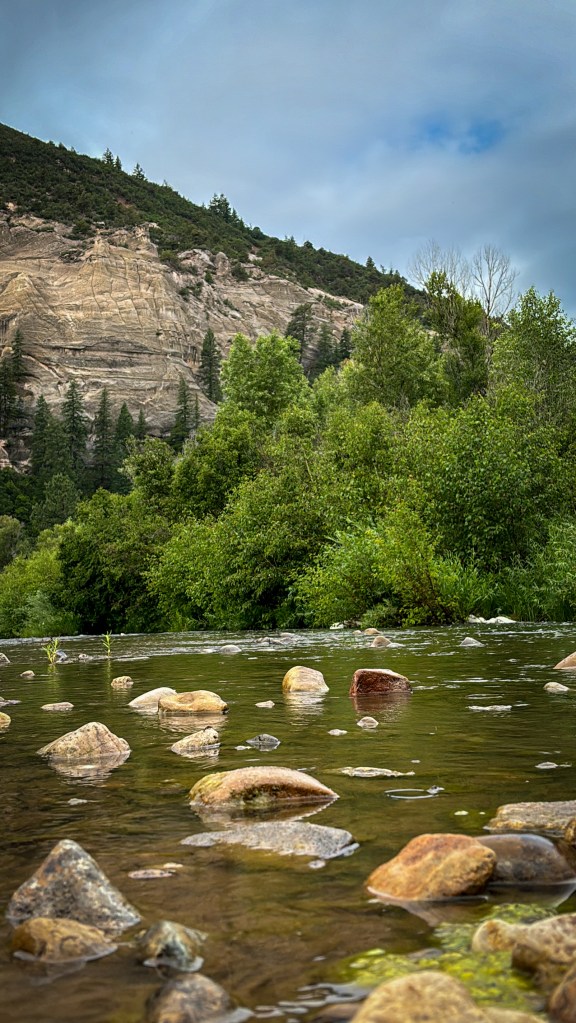
Photography here wasn’t about action—it was about silence. I slowed down and started looking for compositions that told a story: a pool framed by sunlit pine branches, reflections of clouds in still water, the gentle curve of the river disappearing into cottonwood shade.
Using a circular polarizer, I cut glare from the surface and exposed the rocks and movement underneath. I stopped often to shoot macro shots—moss on river stones, fresh caddis cases on logs, wildflowers just beginning to bloom along the bank. The Canon R5 let me switch between stills and slow-motion video, capturing the way wind moved through the reeds like a painter’s brush.

Fly Selection and Brown Trout Behavior
As the sun climbed higher, the trout moved deeper. I switched to a dry-dropper setup: a #14 Stimulator on top with a #18 Zebra Midge below. The browns in the Dolores aren’t huge, but they’re aggressive and feisty, especially when your drift is clean and natural.
I targeted small plunge pools below boulder-strewn riffles and deeper pockets shaded by cliff overhangs. Most takes were subtle—a twitch or a swirl rather than a splash. The largest of the day came from a tight seam below a fallen pine: a buttery brown with red spots vivid against olive flanks. I wet my hands, admired him in the net for a moment, then let him go.

Weather Watching and Midday Reset
As with most Colorado rivers, the Dolores plays by mountain rules—sunny one minute, storm clouds the next. By noon, dark clouds were building behind the ridges. I took the cue to rest, retreating to a patch of grass above the river, checking radar, and reviewing my shots on my iPad Pro. I backed up files, edited a few images in Lightroom using preset adjustments for contrast and warmth, and ate lunch while a soft rain moved through.
Evening Glow and Last Light
By late afternoon, the rain cleared, and the golden hour was beginning. I hiked upstream a little farther to a stretch with higher canyon walls and a series of gentle cascades. The light lit up the canyon like fire—red rocks glowing, the water catching flecks of sun, and the air thick with golden reflections.
This was my favorite photography session of the trip—shooting handheld with my 70–200mm lens, I caught reflections of cottonwoods in the river, crisp landscapes framed with long shadows, and one last brown trout rising in the golden light.
Why the Dolores Stays With You
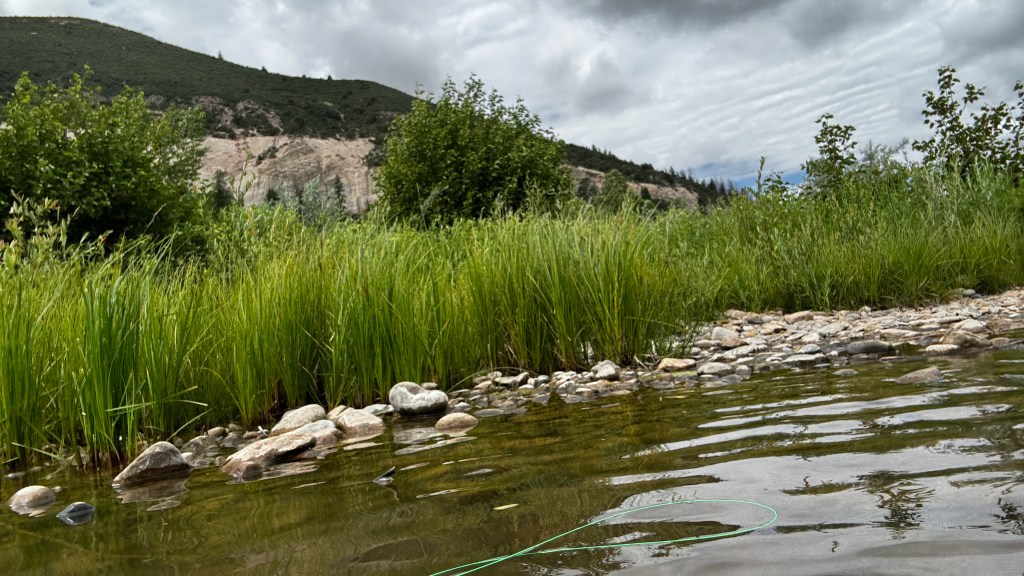
Some rivers give you a lot right away. The Dolores gives slowly. It rewards patience, attentiveness, and a photographer’s eye. You may not land a dozen fish, but each one feels earned. And the scenes—the ones you only find by walking, waiting, and watching—make it unforgettable.
Fly Fishing Dolores River Essentials
• Best Flies: Elk Hair Caddis, Parachute Adams, Zebra Midges, Stimulators, Streamers in fast water
• Rod Setup: 4wt or 5wt rod, long leaders, floating line
• Photo Gear: Canon R5, Sigma 24–70mm, 70–200mm, polarizer, K&F tripod
• Tips: Stay low, fish slow, take your time to photograph the river between casts
• Safety Note: Watch afternoon storms; bring a small first-aid kit and map (no service in remote stretches) Insure you have downloaded all your offline maps
The Dolores River isn’t about action—it’s about appreciation. It asks you to slow down, to watch the way light plays on water, and to cast not just for fish, but for the memory of that perfect, quiet moment in the canyon.
Next Up: Part 6 — Full Circle: Reflections, Routines, and What the Backcountry Teaches Us
 Beyond the Cast