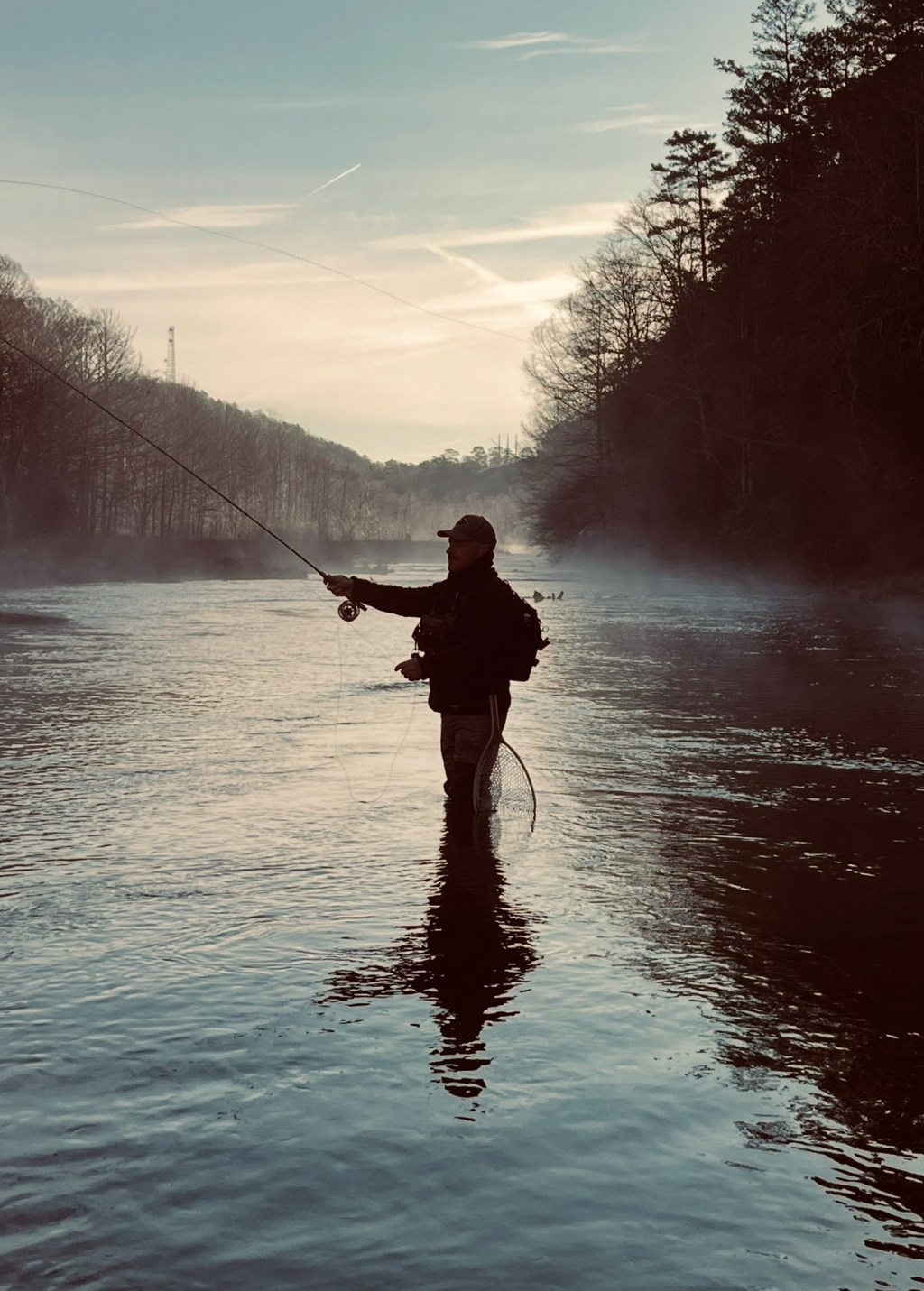
January in Broken Bow, Oklahoma, is one of those trips that tests your patience—and rewards it if you’re willing to adjust. Cold mornings, cold water, and plenty of anglers on the river. This trip was a perfect reminder that winter fly fishing is less about forcing a pattern and more about reading the water, adapting your tactics, and committing to what the conditions are telling you.
Winter Conditions on the Lower Mountain Fork River
Most days started with air temps in the 30–40° range, and water temps hovered in the low-to-mid 40s. Some days were overcast with that soft winter light that feels fishy all day long, while others were bright and clear, putting the fish on edge—especially with moderate to heavy fishing pressure.
These conditions made trout less willing to move far for a meal. They weren’t looking up much, and they definitely weren’t chasing flies across the river. Everything about the water screamed slow, deliberate, and close to structure.
Starting with Dry Flies in Winter Conditions
Like most trips, I started optimistic—throwing dries during the warmer parts of the day. While there were occasional looks and a few half-hearted rises, dry fly action was limited. Winter bugs were sparse, and any surface activity was short-lived.
That’s when the switch needed to happen.
Committing to Streamers:
Once I stopped fishing dries and committed to streamers, the entire trip changed.
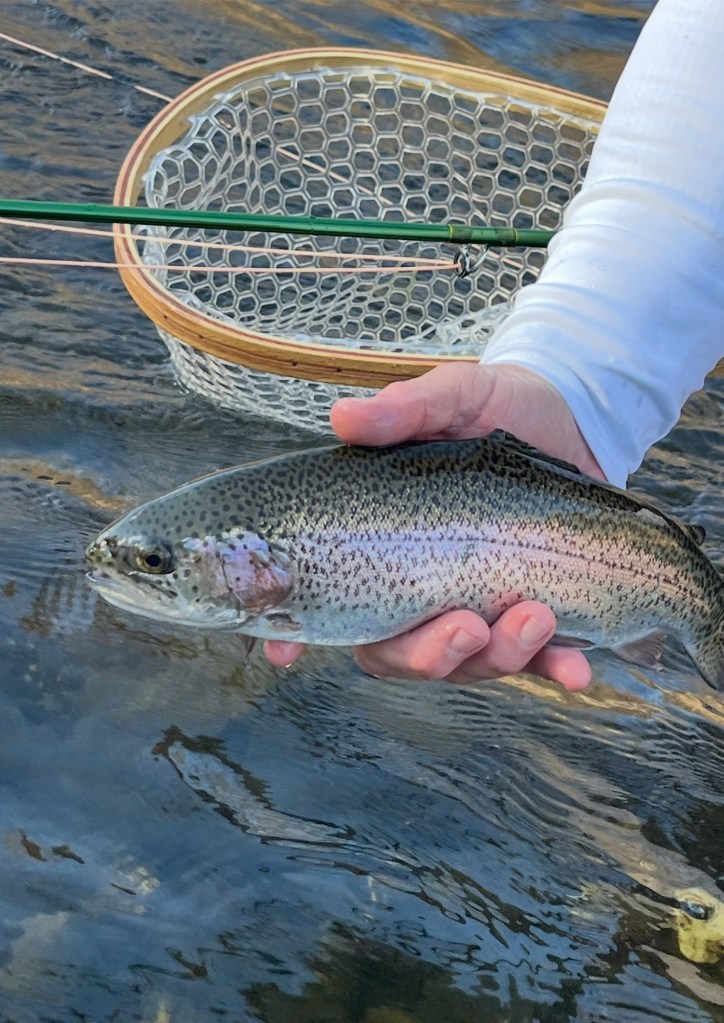
The fly that consistently produced was a damsel green olive marabou streamer. Simple profile, tons of movement, and just enough flash to get noticed without spooking pressured fish.
Why It Worked
In cold water, trout don’t want to waste energy. That marabou breathed with the current, even on slow swings, making the fly look alive without aggressive stripping. The color matched winter forage well, and the subtle action triggered reaction strikes rather than feeding strikes.
Reading the Water: Finding Winter Trout on the Lower Mountain Fork
The key wasn’t just the fly—it was where and how it was fished.
Seams and Soft Edges
Most of the better fish came from seams, especially where faster water dumped into slower runs. I focused on:
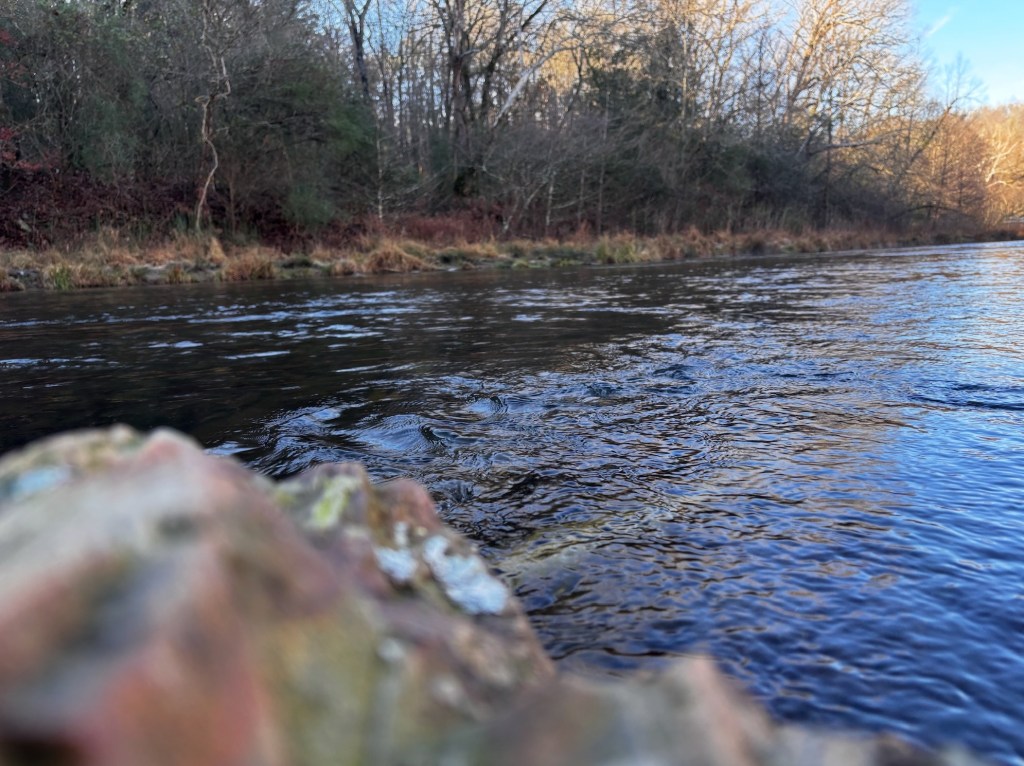
• The inside edge of seams
• Transitions from riffles into deeper runs
• Water where fish could sit comfortably and let food come to them
Casting across the seam and allowing the fly to swing naturally through that transition zone was deadly.
Big Boulders and Structure
The Lower Mountain Fork has plenty of large boulders, and in winter, those rocks are prime holding water.
I targeted:
• The downstream side of boulders
• Slight depressions created by current wrapping around structure
• Soft pockets directly behind rocks where trout could rest
These spots consistently held bigger rainbows, especially when other anglers walked right past them.
The Streamer Swing: Keeping a Tight Line for Reaction Strikes
One of the biggest producers on this trip was keeping constant tension on the line.
Instead of stripping aggressively, I let the streamer swing under tension, rod tip slightly downstream. That tight line did two things:
1. It let the marabou pulse naturally in the current
2. It allowed me to feel subtle takes instantly
Most strikes happened mid-swing or right as the fly started to straighten out below me. Big rainbows would crush the fly with intent—it wasn’t subtle when it happened.
Beating Fishing Pressure on the Lower Mountain Fork River
Even on crowded days, this approach produced more bites and better fish than what I saw around me. While others were cycling flies or pounding the same obvious runs, slowing down and working structure paid off.
Winter trout aren’t everywhere—but when you find them, they’re usually grouped up and willing to eat if you present the fly correctly.
Final Takeaways from January Fly Fishing in Broken Bow, Oklahoma
This trip reinforced a few winter fly fishing truths:
• Cold water means less movement, not no movement
• Streamers shine when surface activity fades
• Structure and seams are non-negotiable in winter
• Keeping a tight line on the swing triggers reaction bites
Broken Bow in January isn’t about numbers—it’s about dialing in tactics and being patient enough to let the river show you where the fish live. When it all comes together, those cold-weather rainbows make every frozen finger worth it.
If you’re heading to Broken Bow this winter, don’t be afraid to put the dries away and let a streamer do the talking.
 Beyond the Cast