
Kayak fishing is all about being in the right place at the right time, and nothing dictates fish movement more than the tide. Whether you’re chasing redfish pushing into the shallows or speckled trout staging near structure, understanding how water moves will help you position yourself for better catches.
Unlike fishing from a boat, a kayak limits how far and fast you can move. That means planning around the tides isn’t just helpful—it’s essential. In this post, we’ll break down how tides work, where fish go during different stages, and how to position your kayak to take full advantage of tidal movement.
The Basics of Tides: What You Need to Know
Tides are the rise and fall of water levels caused by the gravitational pull of the moon and sun. Along the Texas coast, we generally experience a mix of:
• Two high tides and two low tides per day (semi-diurnal tides)
• One high tide and one low tide per day (diurnal tides)
These patterns shift throughout the year, and understanding them helps you predict when and where fish will be actively feeding.
Tides affect more than just water depth—they influence current strength, bait movement, and fish behavior. Let’s look at how different tidal stages impact fishing.
How Each Tide Stage Affects Fish Movement
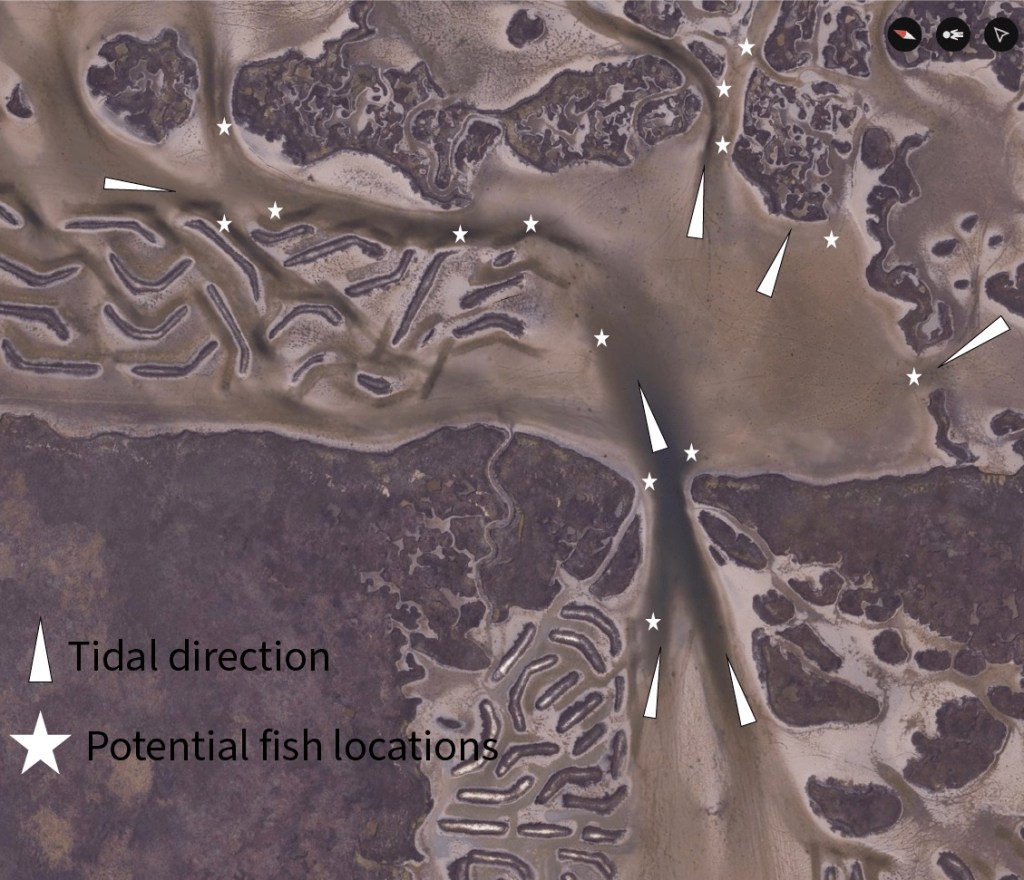
Incoming Tide (Rising Water)
• What happens: Water pushes up onto the flats, flooding marshes and grass beds. Baitfish, shrimp, and crabs move into shallow areas, followed by hungry predators.
• Best fishing areas:
• Grass flats and flooded marshes where redfish hunt for crustaceans.
• Oyster bars and sand pockets where speckled trout ambush bait.
• Creeks and drains where baitfish move inland with the rising water.
• Kayak positioning tip: Set up near marsh edges, grass flats, or points where water is moving in. Cast lures upcurrent and let them drift naturally toward the strike zone.
High Tide (Peak Water Level)
• What happens: Water levels are at their highest, spreading bait over a larger area. Fish can be more scattered, making them harder to locate.
• Best fishing areas:
• Shallow pockets where redfish are cruising, often tailing.
• Deeper grass edges where speckled trout stage.
• Channels and drop-offs where fish wait for the next tidal shift.
• Kayak positioning tip: Paddle quietly along flooded grass flats and look for signs of activity like wakes, tailing fish, or nervous bait. If fish are spread out, cover water with a paddle tail soft plastic or a topwater lure to draw attention.
Outgoing Tide (Falling Water)
• What happens: Water drains from the flats, concentrating bait into deeper channels, cuts, and drop-offs. Predators position themselves to take advantage of the easy meals being pulled by the current.
• Best fishing areas:
• Tidal drains and creek mouths where baitfish get funneled into deeper water.
• The edges of oyster reefs where trout wait to ambush prey.
• Wind-blown shorelines with structure that hold redfish.
• Kayak positioning tip: Anchor near a drain or channel mouth and work lures with the outgoing current. A popping cork with a shrimp imitation works great in these scenarios, as does a soft plastic jig bounced along the bottom.

Low Tide (Lowest Water Level)
• What happens: Water is at its lowest, exposing oyster reefs, mud flats, and deeper potholes. Fish retreat to deeper water but still remain close to structure.
• Best fishing areas:
• Deeper channels and holes where fish are concentrated.
• Drop-offs near sandbars and reefs.
• Shallow areas where fish may be “trapped” waiting for the next incoming tide.
• Kayak positioning tip: If the tide is really low, be cautious of getting stuck in shallow areas. Focus on deeper structure and work slower-moving baits like suspending twitch baits or soft plastics on a jig head.
How to Use Tides to Plan Your Kayak Fishing Trip
1. Check the Tide Charts Before You Launch
Apps like Tides4Fishing, NOAA Tide Predictions, or Windy provide real-time tide data for your area. Look at when the tide will be rising or falling and plan your trip around those peak movement windows.
2. Consider Wind Direction
Wind can either help or hurt your fishing trip. A strong wind against the tide can slow water movement, while a wind pushing with the tide can accelerate it. Adjust your kayak positioning accordingly to take advantage of natural bait movement.
3. Look for Areas That Funnel Water
Anywhere water is forced through a smaller area—like a creek mouth, jetty, or channel—will create a natural ambush point for predators. These areas are excellent for targeting redfish and trout as the tide moves in or out.
4. Use the Current to Your Advantage
Instead of fighting the current, position your kayak so you can cast into it and retrieve your lure naturally with the flow. This mimics how baitfish move, making your presentation more effective.
5. Stay Mobile, but Be Strategic
Kayak fishing requires efficiency. Instead of paddling aimlessly, use the tide to drift through productive areas, covering more water with minimal effort. If the bite slows down, move to a new location where the current is stronger or weaker, depending on the stage of the tide.
Final Thoughts
Tides are one of the most important factors in inshore fishing, and learning to read them will significantly improve your success on the water. By understanding how water movement affects fish behavior and positioning your kayak accordingly, you’ll put yourself in the best possible spots to find actively feeding redfish and speckled trout.
Next time you hit the water, take a few minutes to study the tide charts and plan your approach—you’ll be amazed at how much of a difference it makes.
Stay Connected with Beyond the Cast
Thanks for reading! If you enjoyed this post and want more fishing tips, trip reports, and on-the-water action, be sure to follow along.
Subscribe to our YouTube channel for in-depth videos, gear breakdowns, and on-the-water adventures. Stay up to date by following us on Facebook, where we share fishing reports, trip updates, and connect with fellow anglers.
Join the conversation, share your catches, and let’s keep exploring the water together.
Tight lines, and see you Beyond the Cast!
What’s your favorite tide stage to fish? Drop a comment below and share your experience!
 Beyond the Cast
Let me know your thoughts in the comments below!