

Galveston’s coastal marshes, beaches, and tidal flats serve as critical stopover points for migratory birds along the Central Flyway. For bird photographers, this region offers a dynamic blend of year-round residents and seasonal migrants, each presenting unique opportunities to capture stunning images.
Spending time on the water fishing, hiking through coastal trails, or wading the back bays gives me a front-row seat to this natural phenomenon. In this blog, I’ll explore the best locations for birdwatching in Galveston, break down the camera gear and settings that work best for bird photography, share editing tips, and discuss how angles and composition can elevate your shots.
Best Locations for Bird Photography in Galveston
Finding the right location is key to capturing great bird photographs. Galveston and the surrounding areas provide a variety of habitats, from salt marshes to coastal woodlands, attracting different species. Here are some of the best spots:
1. Bolivar Flats Shorebird Sanctuary
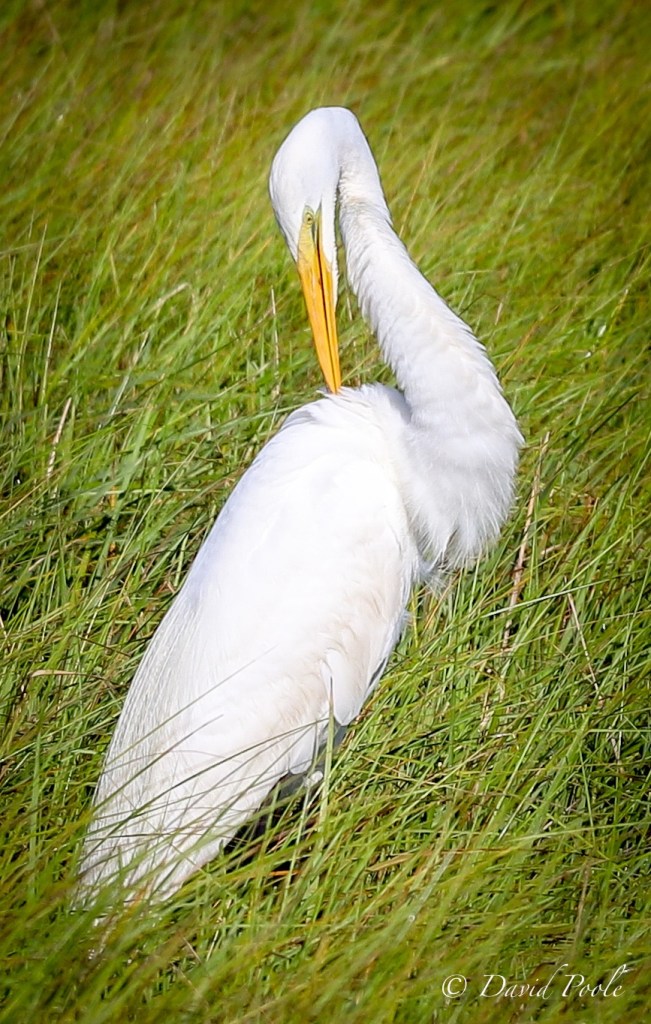
• One of the best spots for photographing shorebirds, pelicans, and wading birds.
• Low tide reveals expansive sandbars and mudflats, which attract feeding birds.
• Ideal for capturing birds in flight, reflections on wet sand, and birds interacting in flocks.
• Best time: Early morning and late afternoon for softer light and active bird behavior.
2. Galveston Island State Park
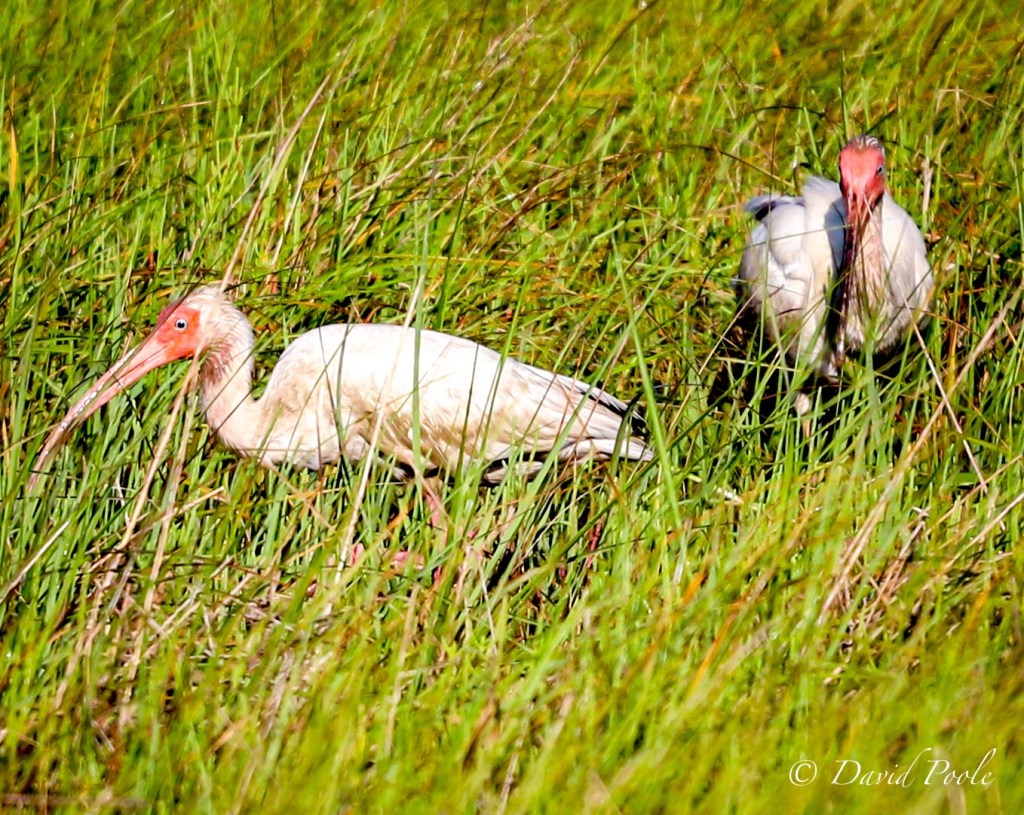
• A mix of beachfront, salt marshes, and coastal prairie draws a diverse range of species.
• Great location for spotting roseate spoonbills, ospreys, and herons.
• The marsh boardwalk offers close-up views without disturbing birds.
• Best time: Sunrise and sunset for golden light and fewer crowds.
3. San Luis Pass
• Excellent for capturing birds in action, such as pelicans diving or ospreys hunting.
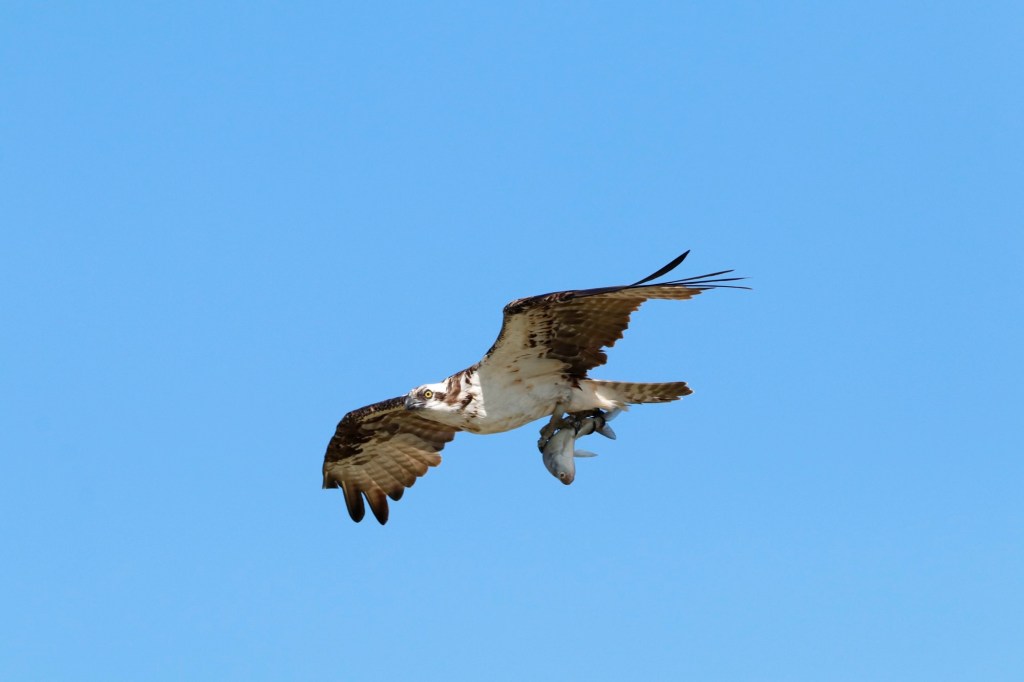
• Strong currents and sandbars make this a hotspot for terns, gulls, and waders.
• The dramatic landscape adds depth to compositions.
• Best time: Morning, when birds are actively foraging.
4. Lafitte’s Cove Nature Preserve
• A wooded sanctuary perfect for warblers, buntings, and other migratory songbirds.
• A great place to practice close-up photography with perched birds.
• Best time: Spring and fall migration, when small songbirds stop to rest after crossing the Gulf.
5. Freeport Marshes & Christmas Bay
• These shallow waters attract egrets, herons, spoonbills, and ibis.
• Best explored by kayak to get low-angle shots and access hard-to-reach spots.
• Best time: Mid-morning when the sun is high enough to illuminate the birds.

Camera Equipment for Bird Photography
1. Camera Body Recommendations
Bird photography requires fast autofocus, high resolution, and good low-light performance. My go-to camera is the Canon R5, which offers:
• 45MP resolution for capturing fine feather details.
• Animal Eye Autofocus to track birds in motion.
• Fast burst shooting (up to 20 FPS) for action shots.
Other great options include the Sony A1, Nikon Z9, or Canon R7 (for a budget-friendly APS-C choice).
2. Best Lenses for Bird Photography
A telephoto lens is essential for getting close to birds without disturbing them. My favorites:
• Canon RF 100-500mm f/4.5-7.1 L IS USM – Versatile for both perched and flying birds.
• Sigma 150-600mm f/5-6.3 DG OS HSM – Budget-friendly but sharp.
• Canon RF 600mm f/11 IS STM – Lightweight for handheld shooting.
A 1.4x or 2x teleconverter can extend reach but may reduce autofocus speed.
3. Ideal Camera Settings
• Shutter speed: 1/1000s or faster to freeze motion.
• Aperture: f/5.6–f/8 for sharpness and depth of field.
• ISO: 100–800 in good light, 1600+ in low light (with noise reduction in post).
• Focus mode: Continuous autofocus (AI Servo/AF-C) for moving birds.
Angles & Composition for Better Bird Photography
1. Eye-Level Shots
• Birds appear more engaging and natural when photographed at their eye level.
• How to do it: Shoot from a low position—kneel, lie down, or use a kayak.
• Example: A close-up of a sandpiper walking through shallow water, with a blurred background.
2. Backlit Silhouettes
• Creates dramatic, artistic images, especially at sunrise or sunset.
• How to do it: Position the bird between you and the sun for a glowing outline.
• Example: A heron standing in the marsh at dawn, surrounded by golden light.
3. Action Shots
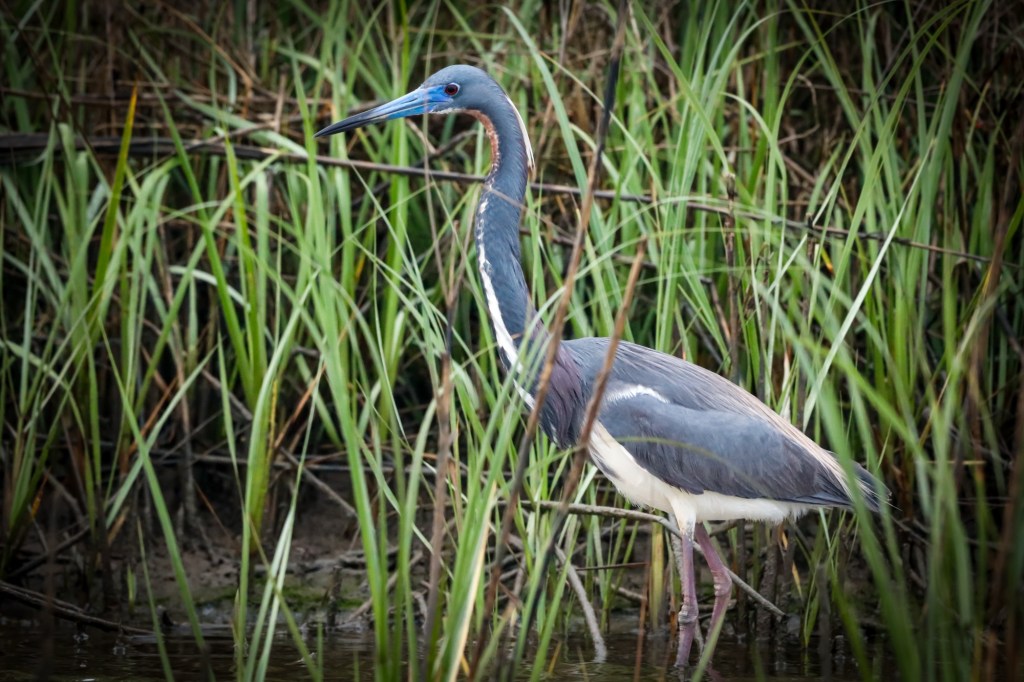
• Captures birds hunting, taking off, or interacting.
• How to do it: Use fast burst mode and pre-focus on the area where the action is likely to happen.
• Example: An osprey diving for fish with wings fully extended.
4. Reflections & Water Scenes
• Water can add a symmetrical, serene effect to photos.
• How to do it: Shoot when the water is calm and position the bird where the reflection is clearest.
• Example: A pelican gliding over glassy water with a perfect mirror image below.

Editing Techniques in Lightroom & Photoshop
1. Adjusting Exposure & Contrast
• Increase contrast to define feathers.
• Adjust highlights and shadows to recover details.
2. Enhancing Colors Naturally
• Use the HSL panel to fine-tune individual colors without oversaturation.
• Warm up images slightly for morning/evening shots.
3. Noise Reduction for High ISO Shots
• Use Lightroom’s Noise Reduction slider to smooth out grainy images.
• Apply selectively—too much can remove fine details.
4. Cropping for Composition
• Use the rule of thirds to position the bird in a natural frame.
• Leave space in front of the bird for a sense of movement.
Conclusion
Bird photography in Galveston offers a perfect blend of challenge and reward. Whether you’re tracking a flock of migrating shorebirds, watching a spoonbill feed in the marsh, or capturing an osprey mid-dive, each moment tells a unique story.
By knowing the best locations, using the right camera gear, mastering angles, and refining editing techniques, you can create images that truly showcase the beauty of the birds along the Central Flyway.
What’s your favorite birding spot in Galveston? Let me know in the comments!
 Beyond the Cast
Let me know your thoughts in the comments below!