The Animas River is a different kind of challenge. It’s not a quiet alpine trickle or a glassy meadow stream—it’s loud, wide, and unapologetically wild. Flowing straight through Durango, Colorado, the Animas is part urban fishery, part wilderness artery. It forces you to think bigger—wider water, heavier flies, longer casts—but still rewards that same backcountry patience.
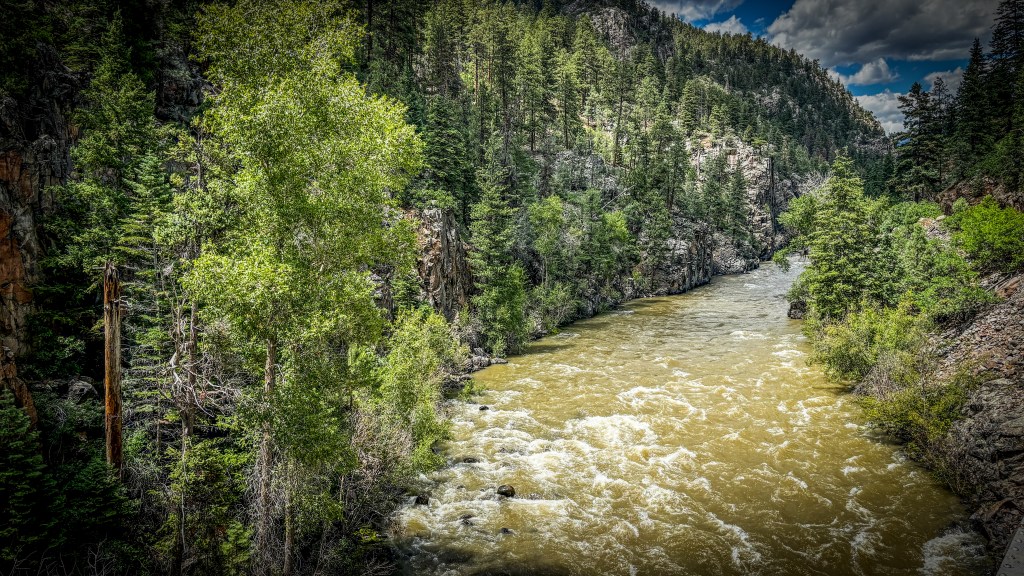
This part of my trip was about rising early, walking the banks in the soft golden light, and chasing browns and rainbows with both rod and camera in hand.
Sunrise in Durango
I woke up before first light, the streets of Durango still quiet. With a thermos of hot coffee, my Sage Spectrum C reel rigged on a 9’ 5wt rod, and my Canon R5 slung over my shoulder, I made my way to the water’s edge just as the sky began to glow.
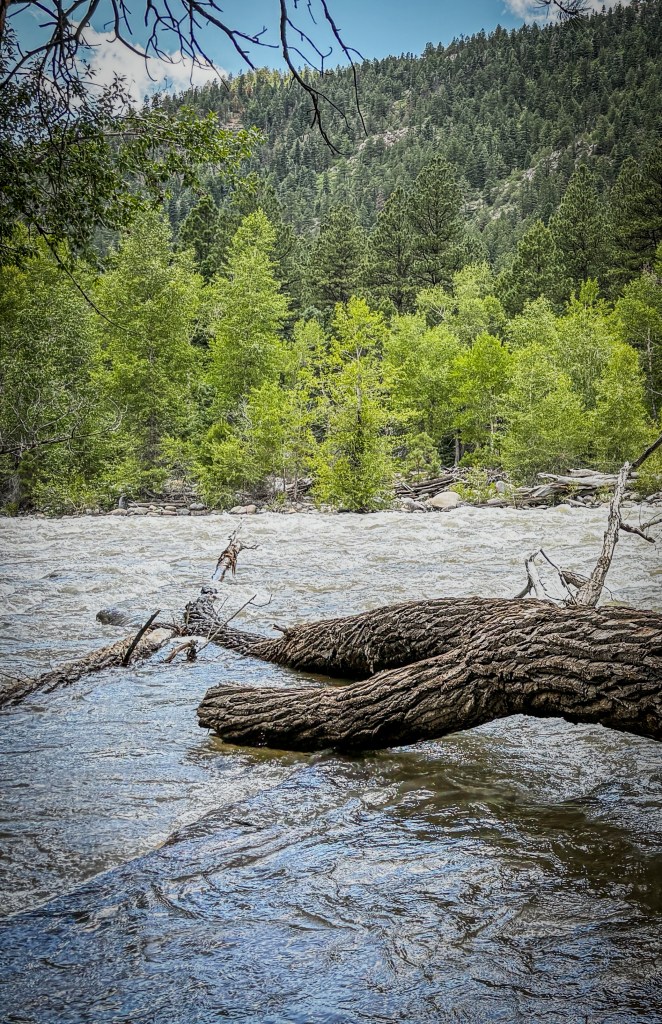
The Animas River Trail makes access easy through town, but don’t let that fool you—there are real fish in this river, and they know how to fight. I found a spot just below a rocky chute, where the water slowed into a deep green run bordered by cottonwoods.
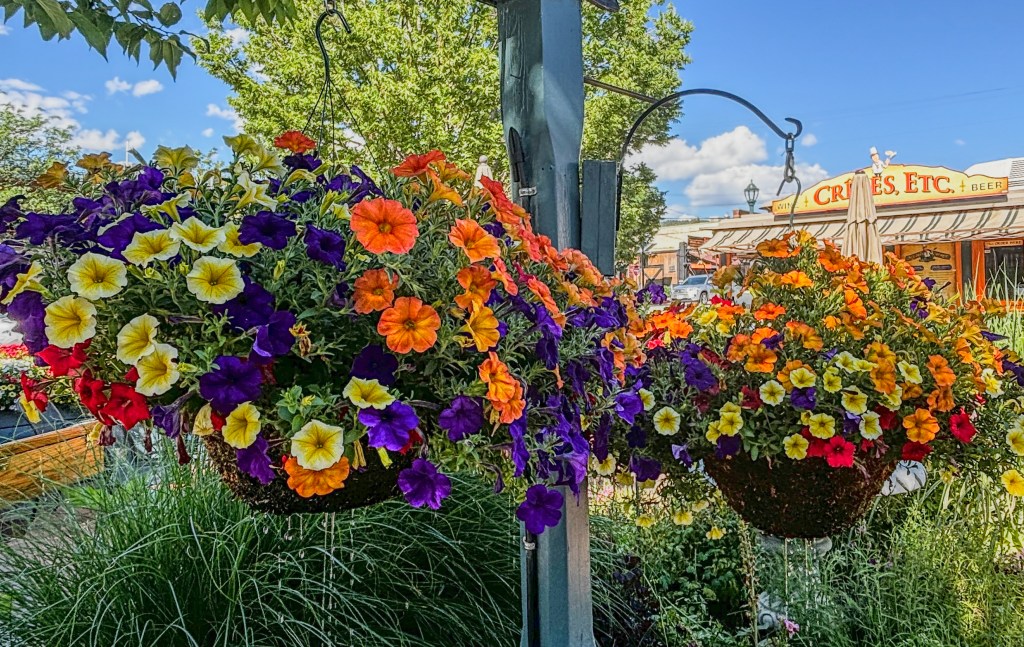
Casting into the Current
Big water requires smart setups. I tied on a #10 Pat’s Rubber Legs with a #14 Flashback Pheasant Tail dropper, running under an indicator with a bit of split shot to get it deep. These trout hold tight to seams and structure, often near the bottom.
On my third drift, the indicator twitched. I set the hook and felt immediate weight—no acrobatics, just a steady pull. A few minutes later, I landed a thick rainbow, chrome-bright and peppered with tiny spots. I kept the fish in the net, let it rest, and grabbed a few quick shots with my 24–70mm lens and a shallow depth of field to blur out the river behind.
Photography on Big Water
The Animas is perfect for dramatic shots. With high banks, old iron bridges, and light that shifts quickly with the clouds, it’s a river made for wide angles. I switched to a 16–35mm lens, shot low from the riverbank, and captured the first sunlight hitting the canyon walls with the water reflecting every shade of blue and green.
I experimented with ND filters for long exposures, letting the current blur while boulders and logs stayed sharp. These kinds of photos tell the story of movement—how the river breathes and shifts around each bend.
Wildlife Along the Banks
Between casts, I kept my eyes open for more than just trout. I spotted a flicker of movement near a rock outcrop—just a blur of fur and a flicking tail. I crouched low and reached for my camera. There, nestled in a patch of wildflowers, a chipmunk was nibbling on a seed head, completely unaware of me. I dialed in my Canon R5 with the 70–200mm lens, adjusted for soft natural light, and waited. The frame came together perfectly: golden grass swaying in the breeze, the chipmunk centered in a moment of stillness. A quiet, unexpected portrait of mountain life, full of charm and detail.
With my 70–200mm lens, I captured tight shots from a distance—one of the benefits of shooting early before the trail sees much foot traffic.

I also grabbed some frames of the little things—dewdrops on wild grass, close-ups of river stones, caddis cases clinging to rocks—the quiet details that add depth to both fishing and photography.
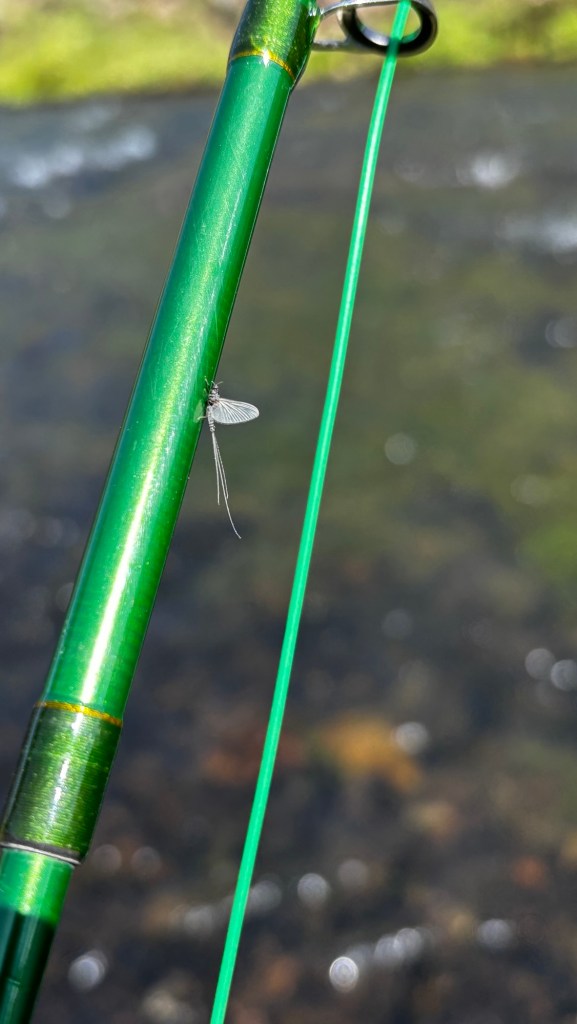
Urban Meets Wild
Fishing the Animas in Durango is a unique experience. You can hear the occasional train whistle or morning jogger on the trail, yet still feel completely locked in with the river. It’s a good reminder that wild places don’t have to be far from home—they just have to be approached with the right mindset.

With a few solid fish landed and a full memory card, I took a break under the old railroad bridge, watching the light shift across the river. That’s the magic of a morning on the Animas—you show up early, stay patient, and let the day unfold at its own pace.
Tips for Fly Fishing and Photography on the Animas River
• Best Time: Early mornings for light, fewer people, and active fish
• Top Flies: Pat’s Rubber Legs, Flashback Pheasant Tails, Jigged Hare’s Ear Nymphs
• Gear: 5wt or 6wt rod, Sage Spectrum C reel, floating line with split shot
• Photography Musts: Wide-angle lens, polarizer, tripod for longer exposures
• Location Notes: Durango River Trail access is great, but hike downstream or upstream early for quieter water
Fly fishing the Animas taught me how to adapt—heavier flies, bolder casts, and a willingness to pause the fishing for a perfect photo. It reminded me that the story isn’t just about the catch—it’s about the experience, the light, the sounds, and the stillness between the casts.
Next up: Part 5 — Whisper Water — Solitude and Browns on the Dolores River
 Beyond the Cast
Let me know your thoughts in the comments below!