Bridges fascinate me. Not just as structures, but as symbols—of movement, ambition, and connection. On a recent photo journey, I captured three iconic bridges that span both distance and time: the John A. Roebling Suspension Bridge in Cincinnati, the Brooklyn Bridge, and the Manhattan Bridge in New York. Each tells a story—woven through cables and steel—of the people who dreamed them into being.
1. John A. Roebling Suspension Bridge – Cincinnati, Ohio
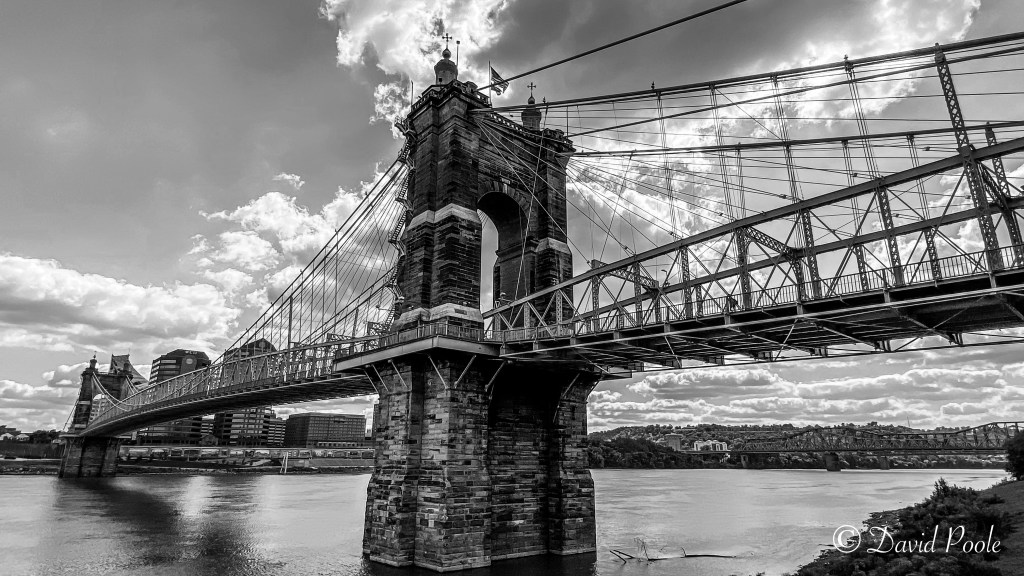
A black and white image of the John A. Roebling Suspension Bridge in Cincinnati, Ohio, highlighting the timeless elegance and architectural detail of this iconic river crossing
Stretching across the Ohio River, this was the prototype for the Brooklyn Bridge. Designed by John A. Roebling, it was completed in 1866 and, at the time, held the record for the longest suspension bridge in the world. Roebling’s engineering brilliance—using a combination of wrought iron cables and stone towers—set the stage for a new era of American infrastructure.
“Before New York, there was Cincinnati—Roebling’s first vision suspended in blue over the Ohio.”
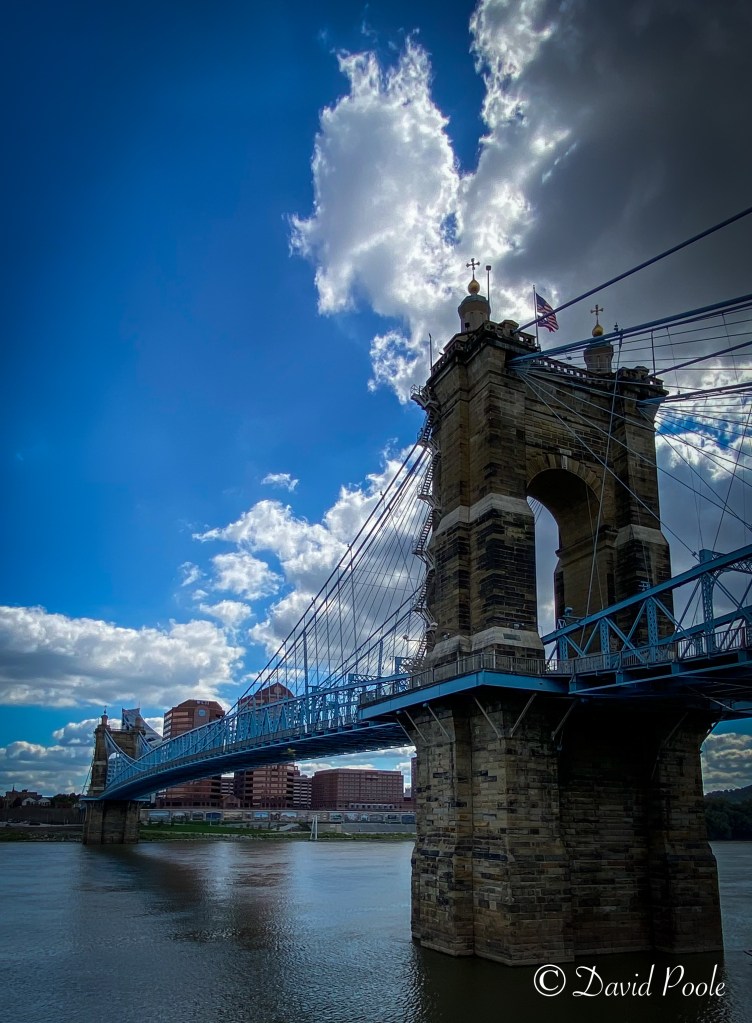
The John A. Roebling Suspension Bridge in Cincinnati, Ohio, captured in full color—its blue steel and stone towers standing tall over the Ohio River, blending historic charm with bold engineering
Standing beneath it with my Canon R5 and Sigma lens, I was drawn to its symmetry and quiet strength. The bridge’s powder-blue hue gives it a timeless, almost dreamlike presence against the river’s steady flow.
2. Brooklyn Bridge – New York City

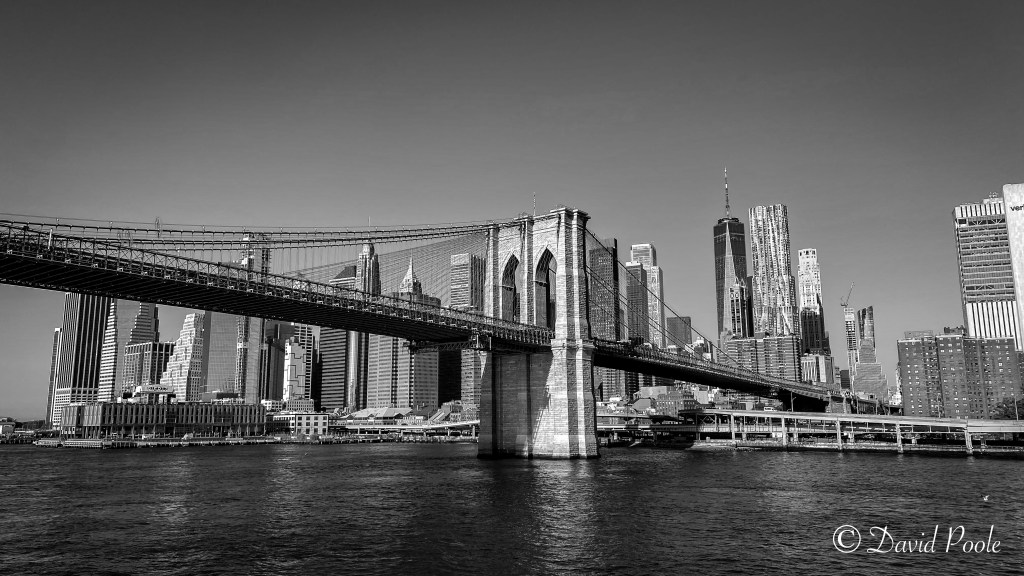
A black and white view of the Brooklyn Bridge in New York City, showcasing its iconic arches and sweeping cables in timeless contrast and detail
Roebling’s ultimate vision came to life years later in New York. The Brooklyn Bridge, completed in 1883, combined stone masonry with advanced steel cable suspension, linking Manhattan and Brooklyn in a feat many once believed impossible. Its story is one of perseverance: Roebling died during early construction, and his son Washington took over—only to become bedridden from caisson disease. Washington’s wife, Emily Roebling, stepped in as a key player, relaying instructions and overseeing much of the final work.
“A bridge that began with tragedy became an enduring symbol of grit and grace.”
Photographing it from beneath the Manhattan Bridge felt like witnessing the ghost of Roebling’s genius lingering between towers of stone and light.
3. Manhattan Bridge – New York City
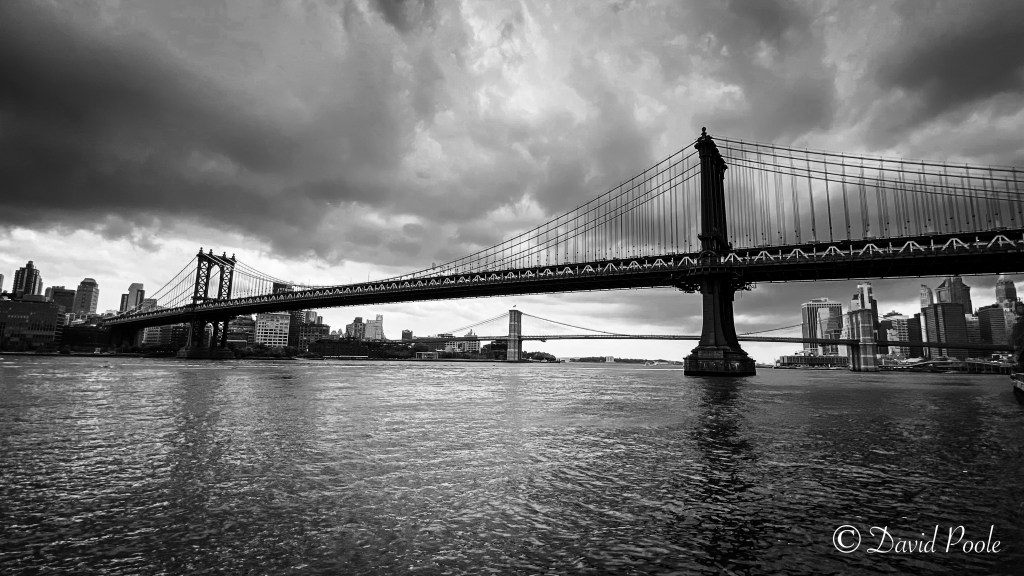
A black and white composition featuring both the Brooklyn Bridge and Manhattan Bridge, capturing the timeless elegance of New York City’s iconic river crossings
Just upstream, the Manhattan Bridge—completed in 1909—stands as the younger, grittier sibling of the Brooklyn Bridge. Designed by Leon Moisseiff, it marked a turning point in engineering, featuring modern steel and a design built to withstand the demands of subway traffic. It may not have the fame of the Brooklyn Bridge, but its lines are bold, and its symmetry underappreciated.
A striking monochrome view of the Manhattan Bridge framed by the New York City skyline, highlighting the bold lines and timeless character of the urban landscape
Shot with my Canon R5 and Sigma 14–24mm f/2.8, I worked from the shoreline to emphasize its sweeping structure and moody urban drama. The overcast sky added natural contrast, highlighting the steelwork and texture.
“Three bridges, three rivers, one story—of legacy suspended in steel.”
Gear Breakdown:
• Camera: Canon EOS R5
• Lens: Sigma 14–24mm f/2.8 DG DN Art
• Tripod: K&F Concept (used for longer exposures in lower light)
• Editing: Lightroom for iPad Pro (Selective contrast + dehaze for architectural texture)
Photography Tip: Use leading lines and vanishing points to draw viewers through the frame—especially when shooting suspension bridges from ground level. Don’t be afraid to tilt upward to exaggerate scale.
Final Thoughts
Each of these bridges tells its own story—not just of engineering brilliance, but of human resilience, vision, and the pursuit of connection. From Roebling’s first suspension design in Ohio to his iconic achievement in Brooklyn, and finally to the steel giant of the Manhattan Bridge, these structures rise above the water as monuments to ingenuity and time.
As a photographer, standing beneath them reminds me why I chase light and line through the lens. It’s not just about capturing a structure—it’s about capturing the soul of a place, the echo of footsteps across a span, the silent stories carved into steel and stone.
“In a world always in motion, bridges remind us that great things stand still—and still stand.”
Thanks for following along on this journey across rivers and time. I’ll be sharing more urban photography, historical explorations, and behind-the-scenes gear tips in upcoming posts—whether it’s under a steel truss or out in the wild. Until then, keep chasing light, chasing stories, and always take the long way across.
 Beyond the Cast
Let me know your thoughts in the comments below!