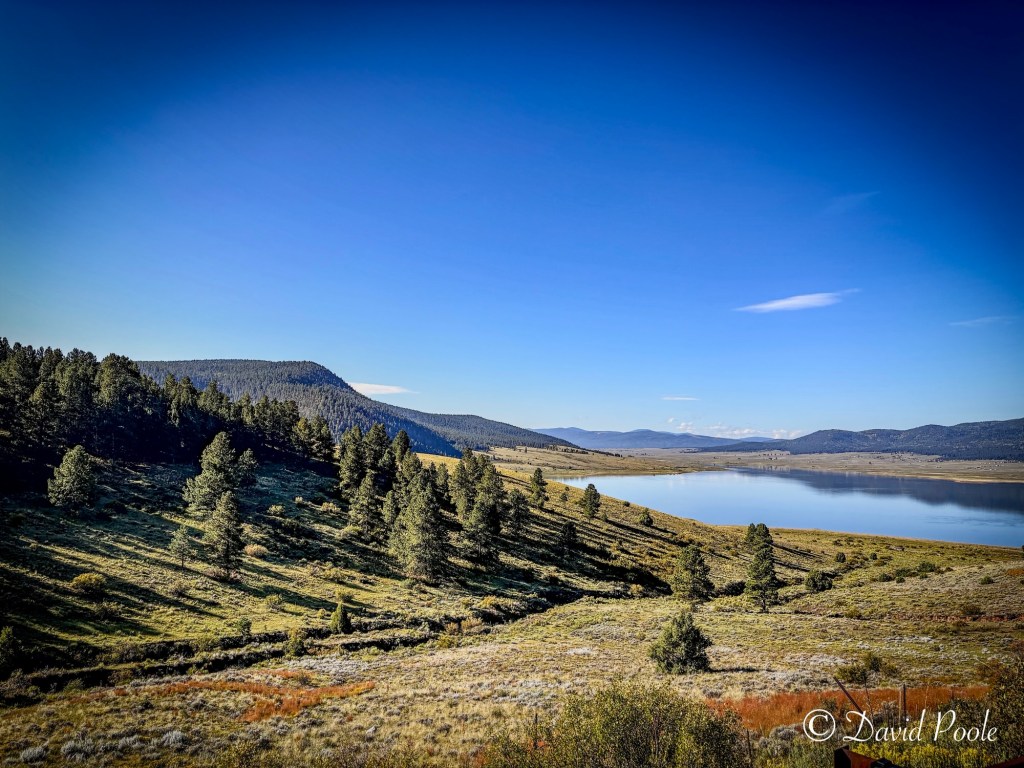
There’s a moment in the mountains when everything goes quiet—wind drops, light softens, and the river slows just enough to show you what it’s holding. That’s where flyfishing for trout stops being about casting and starts becoming about reading. On my recent push toward the New Mexico Trout Slam, those moments dictated every decision I made—especially when the weather turned, flows shifted, and fish refused to play by the book.
This isn’t about throwing streamers because dries aren’t working. This is about understanding when a trout should eat a streamer—and forcing the issue when conditions line up.
Reading Mountain Water Before You Ever Tie On a Streamer
Clear water in New Mexico will expose your mistakes fast. Especially in rivers like the Rio Grande Gorge or smaller tributaries where pressure and visibility make trout cautious.
What I’m looking for isn’t just structure—it’s energy transitions.
Step-by-step approach:
• Start by identifying depth variance near current seams
• Look for soft water adjacent to fast push
• Prioritize shade lines, especially midday under clear skies
• Pay attention to bottom composition—boulders over gravel every time for bigger fish
On one afternoon, bluebird skies pushed fish tight to structure. Everyone around me kept fishing open seams with nymph rigs. I slid into a shadow line behind a submerged rock shelf, switched to a lightly weighted olive streamer, and slowed everything down.
First cast—nothing.
Second cast—tracked.
Third cast—commit.
That fish wasn’t feeding. It reacted.
That’s the difference.
Streamer Tactics That Actually Trigger Trout
Streamer fishing in mountain water isn’t about covering ground fast—it’s about presenting something that looks vulnerable in the right zone.
1. Weight Control is Everything
I carry the same streamer pattern in multiple weights—some nearly weightless, others with added mass.
• Clear, low water: weightless or lightly weighted
• Higher flows (700–900 CFS): moderate weight to stay in strike zone
• Deep plunge pools: heavier, but controlled with rod angle—not just sink
If your streamer is ticking bottom constantly, you’re out of control. If it never drops, you’re not in the game.
2. Retrieve Cadence Based on Fish Behavior
Most anglers retrieve based on habit. I retrieve based on what I see.
Three retrieves I rotate through:
• Dead Drift Swing: cast upstream, let it drift, then swing at the end
• Short Strip Pulse: 2–3 inch strips with pauses (key in cold water)
• Aggressive Strip + Kill: fast strips followed by complete stop
That last one produced my better fish. Not because it looked natural—but because it triggered reaction.
3. Angle is More Important Than Distance
I rarely bomb casts across the river.
Instead:
• Cast slightly upstream at a 30–45° angle
• Let the current bring the fly into the zone naturally
• Control slack to maintain contact without dragging
Most hits came within the first 3–5 feet of the retrieve—not at the end.
Adjusting to Mountain Weather (The Game Changer)
New Mexico weather doesn’t shift gradually—it flips.
Clear mornings turned into wind-driven afternoons. Clouds rolled in, light dropped, and suddenly fish that were glued to bottom started moving.
This is where streamer fishing separates itself.
What changed for me:
• Increased cloud cover = fish moved into mid-column
• Wind chop reduced visibility = more aggressive retrieves worked
• Drop in temperature = slower presentations got ignored, faster strips triggered
I remember one stretch along the Rio Costilla where nothing was happening. As clouds built, I switched from a subtle presentation to a more aggressive strip.
Three fish in ten minutes.
Same water. Different condition.
Backcountry Water: Where the Slam is Won or Lost
You don’t complete a Trout Slam sticking to roadside water.
The real opportunities come from hiking in—where pressure drops and fish behave differently.
Backcountry fish are:
• Less pressured
• More opportunistic
• More willing to chase
But they’re also tied tightly to structure and oxygen.
How I approach new water:
1. Study maps before the trip (elevation, gradient, access points)
2. Identify sections with natural bottlenecks
3. Look for areas where current slows after a push
4. Fish methodically—not fast
On one hike-in stretch, I spent 45 minutes on a single run. Most would’ve walked through it.
That run produced two solid trout on streamers.
Pro Tips Most Anglers Miss
• Watch the fish, not your fly: In clear water, you’ll often see the fish before the eat. Adjust based on their behavior.
• Use lighter tippet than you think: I run 15lb fluoro for control, but drop down when fish are tracking but not committing.
• Rod tip position matters more than line control: Keep it low and engaged during retrieves.
• Fish the water behind you: I’ve caught just as many fish on the swing below me as I have upstream.
• Don’t overfish a run: If a fish follows and doesn’t eat, change angle or retrieve—don’t just repeat.
Mistakes That Cost Me Fish (And Will Cost You Too)
• Fishing too fast: Mountain water forces patience. Rushing kills opportunities.
• Ignoring light conditions: Bright sun vs cloud cover completely changes fish behavior.
• Overweighting flies: More weight doesn’t mean more fish—it means less control.
• Standing too close: Clear water demands distance.
• Not adjusting: If you’re not changing retrieve, angle, or depth—you’re guessing.
Integrating Photography Without Killing the Moment
Fishing these waters isn’t just about catching—it’s about documenting something that most people never see.
I carry my Canon R5 paired with a mid-range zoom and a lightweight tripod strapped to my pack.
When I shoot:
• Early morning: soft light, low contrast
• Midday: focus on water textures and details
• Evening: silhouettes and depth
Composition approach:
• Use the river as a leading line
• Frame shots with foreground elements (rocks, grass, rod)
• Capture motion—water moving, line casting
One of my favorite shots came right after landing a fish—not of the fish, but of the river settling back into stillness.
That’s the story.
The Bigger Picture: Flyfishing for Trout with Intent
This trip wasn’t about numbers. It was about executing a plan—reading conditions, making adjustments, and earning every fish.
Streamer fishing in New Mexico taught me one thing:
You don’t wait for fish to feed—you make them react.
That mindset changes everything.
Final Thoughts
If you’re serious about flyfishing for trout, especially in backcountry waters, you have to move beyond patterns and into process.
Study your water. Watch the conditions. Adjust constantly.
And when it all lines up—commit to the decision.
That’s where the fish are.
For more real-world fishing strategies, trip breakdowns, and photography from the water, follow along at:
👉 Follow Beyond the Cast on Facebook for updates, tactics, and new content
 Beyond the Cast
Let me know your thoughts in the comments below!