Category: Fly Fishing | Beyond the Cast — Tactics Built on Time. Not Theory.
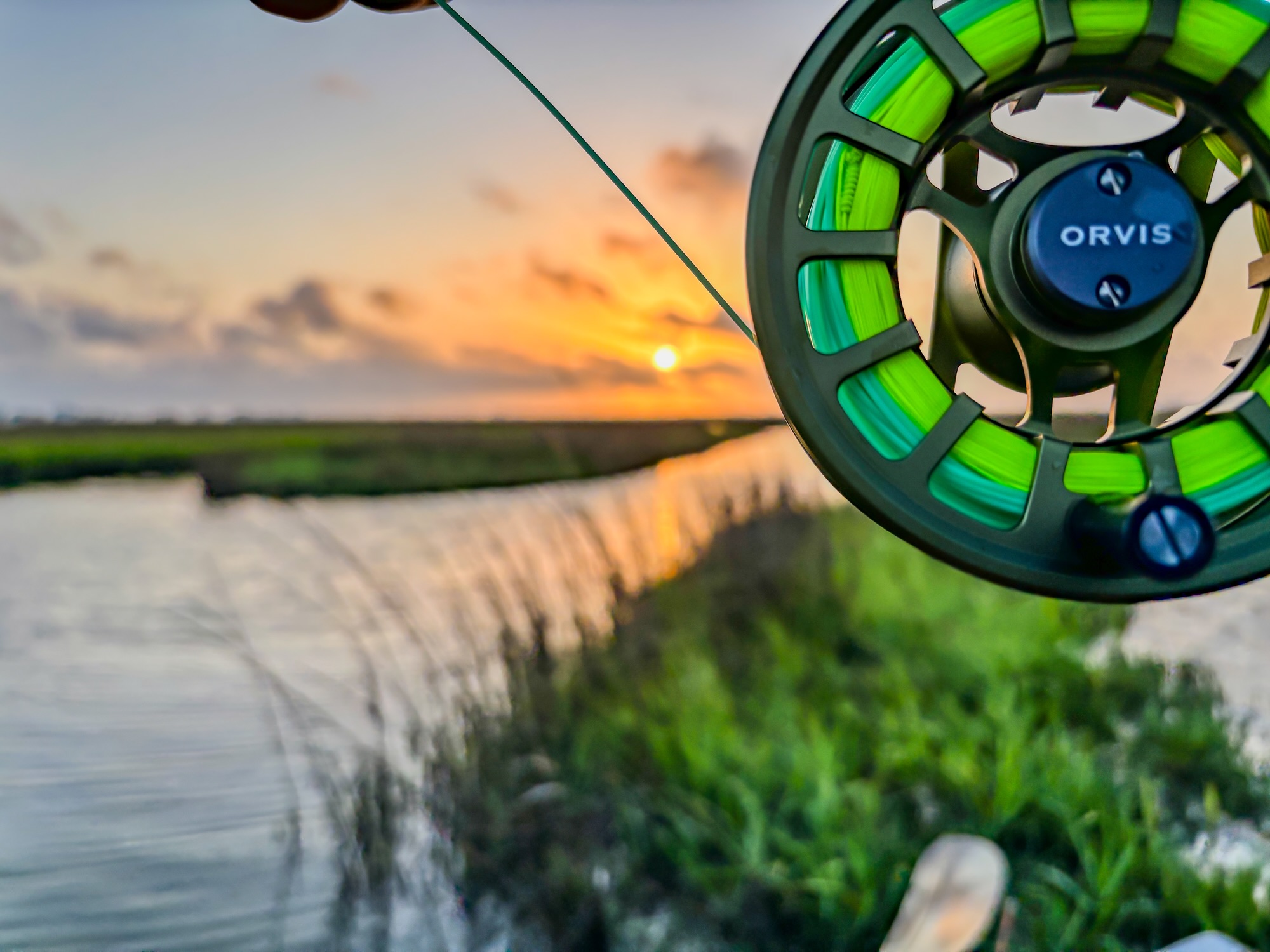
The rod was still in my hand when the redfish surged left, then hard toward the mangroves. In a single heartbeat I needed my drag to be right — not close, not almost there — right. The Orvis Mirage didn’t flinch. The line peeled clean, the carbon drag engaged without a hiccup, and thirty seconds later the fish was in my palm.
That moment is the whole reason I’m writing this. After 35 years on the water, chasing everything from mountain trout to Texas inshore reds, I’ve learned that fly reels and lines are not afterthoughts. They are the difference between connecting and losing, between a clean cast over nervous fish and a pile of coiled line that spooks the flat. Over the past several seasons I’ve built a two-reel, three-line system around the Orvis Mirage 8/9, the Orvis Hydros III 5–7wt, and three very different Cortland 444 lines: the WF9 Guide Taper, the 444 Peach 6-weight, and the 444 Clear Camo Intermediate. Here’s an honest, on-the-water breakdown of all five — including how I run that 8/9 setup across two completely different fisheries.
The Orvis Mirage 8/9 — Built for Salt, Deadly on Bass
If I had to build a single-reel fly system and never look back, this would be it.
The Mirage (size IV, rated for 7–9 weight lines) is machined from aerospace-grade 6061-T6 aluminum bar stock and is made in Vermont. At 8.9 ounces it’s mid-pack for the class, but the weight lands in the right places — the balance on an 8-weight rod is immediately noticeable when you pick it up. The drag system is sealed with carbon fiber and stainless steel disc components and goes from zero to full drag in a single rotation of the knurled knob. That single-turn design sounds like a drawback on paper — and I’ve heard the debate — but in practice it means I can make a precise drag adjustment mid-fight without overthinking. When a big redfish is burning line toward an oyster bar and the clock is running, I don’t want five full rotations standing between me and more pressure.
The sealed drag offers approximately 10 to 12 pounds of stopping power in the 8-weight version, with virtually zero startup inertia. The drag engages instantly, without any perceptible hitch or stutter that could introduce slack and cost you the fish. That zero-inertia quality is everything when a speckled trout or redfish makes a sudden direction change at close range.
The retrieve rate lands at nearly 10 inches per turn — top tier for the class. On the flats, when a redfish turns and burns back toward you, picking up slack fast is survival. The Mirage handles it without drama.
What I love on the water: The finish has held up to two full seasons of Texas inshore abuse — oyster shell drops, saltwater, boat deck grit. The Type III hard-coat anodizing is extremely durable against abrasion and corrosion. I rinse it after every salt trip and that’s genuinely the only maintenance I’ve performed. Orvis backs it with a lifetime guarantee against defects in materials and workmanship. For a reel at this investment level, that warranty matters.
One honest critique: The drag click is subdued. If you want an aggressive, loud click when a fish strips line, the Mirage will feel quieter than you’d expect. It doesn’t bother me — I care more about what the drag does than what it sounds like — but it’s worth knowing going in.
How I Run the 8/9 Setup Across Two Very Different Fisheries
Most fly anglers think of an 8 or 9 weight as a saltwater-only tool. I don’t. Over the years I’ve learned that the same setup — Orvis Mirage loaded with the right Cortland line — translates directly from Texas inshore flats to largemouth bass in heavy cover and smallmouth in current. The key is understanding which line to spool for which situation, and why.
Redfish and Speckled Trout on the Flats
This is where the Mirage 8/9 was built to live. When I’m wading a Texas marsh or standing on the bow scanning for tailing reds, I run the Cortland WF9 Guide Taper. The aggressive weight-forward head loads the rod in one or two strokes — because on the flats, you rarely get a third. A redfish at 45 feet in skinny water doesn’t wait for you to find your casting rhythm.
The Guide Taper turns over large, air-resistant patterns — clousers, crab flies, big deceivers — into a coastal wind without falling apart at the loop. That matters more than almost any other line characteristic when you’re fishing open water with a steady Gulf breeze pushing against you.
For speckled trout, especially when they’re holding just under the surface film in clear water or under bright midday light, I switch to the Cortland 444 Clear Camo Intermediate. That 1.5 to 2 inch-per-second sink rate gets the fly into the strike zone without ripping it through on the retrieve. The clear camo profile virtually disappears in the water column — trout that blow up on a floating line in pressured or clear conditions will often eat the same fly without hesitation on an intermediate. The line is built on a monofilament core with a supple coating that stays flexible even in cooler water, and the welded front loop makes leader changes fast when conditions shift.
The Mirage’s sealed drag earns its keep in both scenarios. Redfish are unpredictable — they’ll peel toward an oyster bar before you can process what’s happening — and the instant drag engagement with zero startup inertia means you’re applying real pressure from the first inch of that run.
Largemouth and Smallmouth Bass
This is where experienced fly anglers raise an eyebrow, and where I tell them to cast it before they judge it.
An 8-weight is genuinely ideal for largemouth in heavy cover. Big poppers, double-haul clousers, weighted woolhead patterns — these are not 5-weight flies. The 8/9 Mirage setup throws them accurately and with enough authority to cut through wind that would collapse a lighter rod. When I’m working largemouth tight to vegetation or dock structure, I stay on the WF9 Guide Taper. I need to punch a fly into a tight window and turn it over cleanly on a short, efficient stroke. The Guide Taper does exactly that — no wasted energy, no soft loop that dies short of the target.
For smallmouth in rivers and current, I make the switch to the Clear Camo Intermediate. Smallmouth in moving water hold in the mid-column — not on the bottom, not busting the surface — and a slow, steady swing through a seam at 1.5 to 2 inches per second puts the fly right where they’re feeding. A floating line in current creates belly and drag that pulls the fly unnaturally through the drift. The intermediate cuts through that, stays in direct contact with the fly, and gives you a feel that translates to cleaner, more decisive hook sets.
The Mirage handles bass just as confidently as it handles reds. The large arbor picks up slack fast when a smallmouth charges the bank and reverses — a moment where slower-retrieving reels cost you the fish before the fight even starts.
The Line-Switching Discipline
The real skill in running one reel across two fisheries is knowing when to swap lines. I keep a spare spool loaded with the Clear Camo Intermediate so I can make that change on the water without tearing down the whole setup. Salt in the morning, bass in the afternoon — the Mirage doesn’t care. Give it the right line and it delivers every time.
The Orvis Hydros III 5–7wt — Sealed Drag, Serious Performance at a Honest Price
There’s a version of this review where I call the Hydros III a “budget alternative” to the Mirage and move on. That version would be wrong, and it would undersell what this reel actually does on the water.
The Hydros III (rated for 5–7 weight lines) weighs in at 5.5 ounces and measures 3.7 inches in diameter — a genuinely well-balanced fit on a 6-weight rod, light enough to fish all day without the fatigue that heavier reels introduce over a long session on moving water. Orvis machined it from bar-stock aluminum, narrowed the spool to minimize line stacking, and radiused the reel foot — the same feature on the Mirage — to protect the leader from kinking at the connection point. That’s a detail that separates thoughtfully engineered reels from ones that are just assembled.
What separates the Hydros from the competition at its price point is the drag. The sealed carbon and stainless steel disc system delivers zero startup inertia — the same hallmark of the Mirage — with up to 12 pounds of stopping power when backed off slightly from full. That is a number that competes with reels costing significantly more. The drag knob is larger and more ergonomically accessible than previous Hydros versions, which matters when you’re fighting a fish and need to make a quick adjustment with wet hands. The large-arbor design drives retrieve rates of over 10 inches per turn, reducing line coil and keeping the fight efficient.
I run the Hydros III on my freshwater setups and on lighter inshore days — trout rivers, smallmouth in current, bass when I want a more finesse-oriented presentation, and calmer inshore days targeting specks in cleaner water. The sealed drag means I don’t have to panic about a light salt exposure the way I would with a basic unsealed reel — but I still rinse it thoroughly after any inshore use, because seals are only as good as the maintenance behind them.
The Hydros is backed by Orvis’s lifetime guarantee against defects in materials and workmanship — the same unconditional coverage that comes with the Mirage. At its price point, that warranty commitment is significant.
What I love on the water: The Hydros III is light, balanced, and precise. On a 6-weight trout or smallmouth setup, it disappears on the rod and lets the casting do the talking. The drag is smooth and linear enough that I can protect light tippet against a hard-running trout without overcorrecting. For lighter inshore work — specks in calm bay water, smaller reds in clear conditions — it holds up better than most anglers expect from a reel in this class.
Where it earns its keep most: Freshwater trout rivers, smallmouth and largemouth in cleaner water, and lighter inshore presentations when conditions don’t demand the stopping power of the Mirage. It also serves as my dedicated backup on any trip — if something happens to the Mirage, the Hydros steps in and doesn’t cost me the fish.
Honest reality check: The Hydros III is rated through 7 weight and handles that range well. Don’t push it into sustained heavy inshore salt conditions without diligent rinsing and maintenance. Its sealed drag is a genuine asset, but the Mirage’s Type III hard-coat and heavier construction were built specifically for that punishment. Use the right reel for the environment you’re actually fishing.
The Cortland WF9 Guide Taper — Load Fast, Deliver Hard
A guide taper is engineered for one thing: getting your fly delivered accurately under real-world conditions, not ideal ones. Wind, pressure, distance, one shot at a moving fish — a guide taper handles all of it.
The Cortland WF9 Guide Taper is my default load on the Mirage when I’m heading to the Texas coast or throwing big flies for bass. The aggressive weight-forward head loads the rod immediately — critical when you’re sight-fishing redfish and have a single window before the fish moves out of range. There’s no soft loading period, no wasted false cast. The head transfers energy directly and turns the fly over hard, which matters when you’re throwing a large clouser or crab pattern into a sustained coastal wind.
Key real-world application: When I’m on the bow of a skiff and the guide calls the fish at 50 feet, 11 o’clock, moving left — I need two false casts maximum and a fly that lands where I’m looking. The WF9 Guide Taper makes that possible because the head is loaded and transferring energy from the first stroke. Presentation lines with long, delicate tapers simply don’t load that fast, and on the flats, time is always the variable you can’t control.
The Cortland 444 Peach 6-Weight — A Classic That Earns Every Compliment
There’s a reason the 444 Peach has been in production for over 50 years and still commands one of the most loyal followings in freshwater fly fishing. It’s not nostalgia — it’s a line that keeps proving itself trip after trip.
The 444 Peach is built around a long front taper that produces subtle turnover and feather-light presentations, ideal for dry fly work where finesse is the whole game. The body and rear taper provide the stability needed for longer roll casts and clean mending, which matters on technical trout water where drag-free drift is everything. It’s manufactured in Cortland, New York, and the century-plus of fly line craftsmanship behind that name is something you actually feel in the hand.
I run the 6-weight version on my Hydros III for trout and lighter bass work. The coating is supple in a way that budget lines simply don’t replicate — low memory, clean shooting, and durable enough to handle extended use without the cracking and stiffness that plagues cheaper options. It works equally well for wets, dries, nymphs, and smaller streamers, which makes it genuinely versatile across a full fishing day rather than locked into one technique.
What I love on the water: In clear, low conditions where presentation is the difference between strikes and refusals, the Peach delivers the kind of soft, precise turnover that gives you a fighting chance. It’s not a power line — don’t try to muscle big flies with it — but for what it was designed to do, it remains one of the best values in fly fishing.
The Cortland 444 Clear Camo Intermediate — The Line Most Anglers Should Be Fishing More
The Clear Camo Intermediate is the most underutilized line type in the average fly angler’s bag, and one I reach for more often than most people expect.
The line sinks at a consistent 1.5 to 2 inches per second across its full length, built on a monofilament core with a supple coating that stays flexible in cold water and resists the coil memory that makes cheaper intermediate lines a frustration to fish. The clear camo color profile disappears against a wide range of water backgrounds — it’s not a gimmick. In clear conditions, line visibility to the fish is a real factor, and this line addresses it directly.
I run it on both setups depending on conditions: on the Hydros III for trout and light bass subsurface work, and on the Mirage for speckled trout and smallmouth when I need the fly in the mid-column. The monofilament core also means direct contact with the fly throughout the drift or retrieve — something floating lines with tip sag simply can’t match. That contact improves strike detection noticeably, especially on subtle takes from trout holding in slow current.
Key real-world application: The Clear Camo excels in the 1 to 10-foot range of the water column. By counting down after the cast — knowing the line sinks roughly 1.5 to 2 inches per second — you can dial in a specific depth and fish it systematically. Start shallow, work deeper until you find fish. It removes the guesswork from subsurface fly fishing and replaces it with a repeatable process.
Pro Tips — What Most Anglers Overlook with This Setup
Don’t skip the spare spool. The ability to switch from the WF9 Guide Taper to the Clear Camo Intermediate in seconds — without re-rigging from scratch — changes how you fish. Conditions shift. Fish move in the column. Having that second line loaded and ready is not a luxury, it’s a functional advantage that costs you nothing once you’re on the water.
Match the line to the conditions, not just the species. I’ve taken reds on the Clear Camo Intermediate and bass on the Guide Taper. The line choice is about where the fish are holding and what the conditions demand — not a hard species-to-line assignment that never changes.
Rinse both reels after any inshore exposure. The Mirage’s Type III anodizing is built for punishment, but a rinse after every salt trip is still non-negotiable. The Hydros III’s sealed drag is a genuine asset in light inshore conditions, but no seal lasts indefinitely without basic maintenance. Build the rinse into your routine and both reels will outlast your patience to replace them.
Set your drag before you’re on the fish. The Mirage’s single-turn knob allows fast adjustment mid-fight, but your baseline drag should be dialed in before the first cast. Set it on the dock or the bank. Not on the bow with a fish already moving.
Mistakes to Avoid
Running the Hydros III into heavy sustained inshore salt is the most common misstep anglers make with this two-reel system. The sealed drag handles light exposure well, but repeated hard inshore sessions without diligent rinsing will wear it faster than the Mirage’s more heavily armored construction. Know which reel belongs in which environment.
Using the 444 Peach for bass and inshore work is the second. It’s exceptional for what it was designed to do — delicate freshwater presentations — but it was not engineered to turn over a 3/0 clouser into a coastal headwind. Reach for the Guide Taper when the fly gets heavy and the conditions get real.
Ignoring line memory on the intermediate is the third. Even the Clear Camo — one of the more supple intermediates available — benefits from a slow hand-stretch before the first cast of the day. Pull 30 feet off the reel and work it gently by hand. The line will shoot and cast noticeably better from the first presentation forward.
Finally, don’t neglect backing capacity. Confirm your yardage on the Mirage before the trip, not during it. A redfish that finds a run of clean shallow water is going to take line fast and far. Know your system before the fish reveals what you didn’t.
Capturing the Moment — Photography Notes
Fly fishing gear is a compelling visual subject, and both the Mirage and the Hydros have the kind of machined detail that rewards a close lens. When I want to document gear on the water, I reach for the Canon R5 with the RF 100mm macro lens — the texture of the drag knob, the porting pattern on the spool, the reel foot seated in a cork grip. These details tell the story of gear built with real intention, and they read immediately in a strong image.
For action photography — the cast loop unrolling over a Texas flat, the bend in a rod with a redfish on the other end — the RF 70-200mm f/2.8 at a wide aperture isolates the angler against the marsh background with the compression that makes a coastal image feel cinematic. The golden hour window, roughly 30 to 45 minutes after sunrise, is when inshore water turns colors that no other time of day replicates. That’s the window I want for both the fish and the frame.
For still gear shots on the water, overcast light is your friend. It eliminates harsh reflections off anodized aluminum and gives you accurate, even color across the reel’s finish. A natural background — wet grass on the bank, a weathered boat gunnel, tailing water — grounds the image in the environment rather than making it feel like a product catalog.
Final Thought
Gear doesn’t replace skill, time on the water, or the ability to read a flat and know where the fish are before you see them. But the right gear stops being something you think about mid-fight. After two seasons running this exact system — Mirage on the salt and heavy freshwater, Hydros III on the lighter freshwater and inshore end, Cortland lines matched to the conditions and the column — I’ve stopped thinking about the gear entirely.
I think only about the fish.
That’s the point.
For more fly fishing tactics, inshore strategy, and on-the-water gear reviews built on real experience, visit Beyond the Cast — and follow us on Facebook for updates from the water.
Leave a Reply